The most common dental emergencies are a dental abscess, a cracked tooth or filling, facial trauma such as a knocked-out tooth or a broken jaw, and acute TMJ pain or a locked jaw. A simple toothache or a broken crown is common too, though it is usually best handled at the next available appointment. For any of them, the most useful thing you can do is call as early in the day as possible, because tooth pain generally gets worse, not better, when it is left alone.
This guide from the Timonium office of Dr. Steven W. Haywood, DDS explains each of the five, how urgent it is, what to do right away and how it is usually treated. For how and when the practice sees emergency patients, see emergency dental care in Timonium.
1. A dental abscess
What it is
An abscess usually starts when the nerve of a tooth becomes infected with bacteria. Left uncontrolled, the bacteria can spread through the jaw and cause swelling, and that swelling can become life threatening.
Signs to watch for
- Pain that comes and goes when you chew, or throbs constantly
- Swelling in the gum, jaw or face
- A bad taste or tenderness around one tooth
An abscess does not always hurt. It can show on an X-ray before it causes pain, which is one reason regular checkups matter.
What to do
Call the office right away, especially if your face is swelling. If swelling makes it hard to breathe or swallow, go to the emergency room. Antibiotics can slow the spread of infection, but they do not replace dental treatment. A root canal or an extraction can resolve abscess pain. For more on how infections spread and how they are treated, read oral infection signs, causes and when to call.
2. A cracked tooth or filling
Why cracks vary so much
A crack can run horizontally or vertically, and it can reach the nerve. A crack along the gumline is usually a horizontal fracture that can normally be saved with restorative and surgical procedures. A vertical crack that splits the entire root means the tooth cannot be saved, and the broken pieces are removed. A partial vertical fracture may still be saved.
What to do
- Rinse your mouth gently with warm water.
- Save any pieces of tooth or filling and bring them with you.
- Hold a cold compress against your cheek to help with swelling.
- Avoid chewing on that side.
- Call promptly, particularly if the crack is deep or painful.
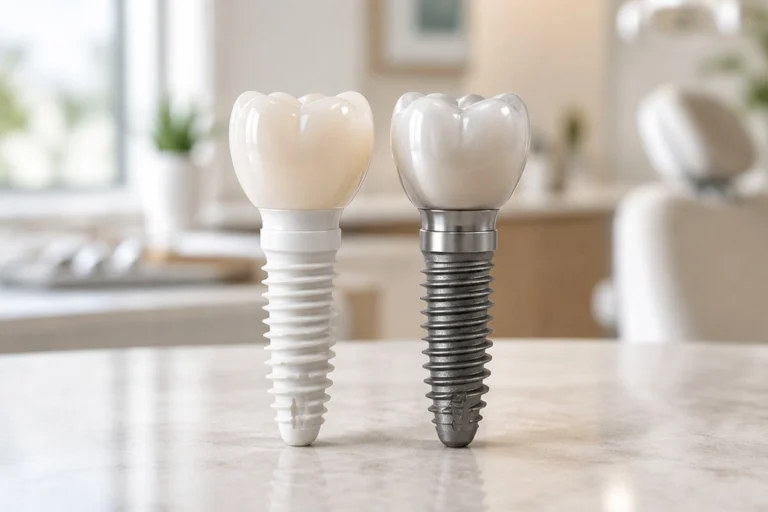
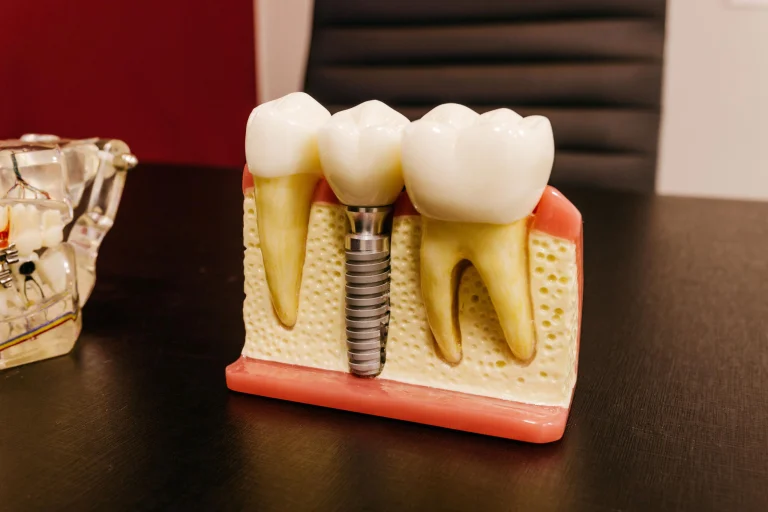
If a tooth cannot be saved, Dr. Haywood can help you decide whether a dental implant or a bridge is the better way to replace it. See tooth extractions.
A chipped tooth
A small chip without pain is usually less urgent than a deep crack, but it is still worth calling about, because a chip can leave a sharp edge or expose the inner layers of the tooth. If part of the tooth broke off, it probably cannot be reattached, but bring the piece anyway. Dr. Haywood can examine the tooth and explain the options for repairing it.
3. Facial trauma: a knocked-out tooth or broken jaw
A fall, a sports injury or an accident can be the most frightening kind of dental emergency.
A knocked-out tooth
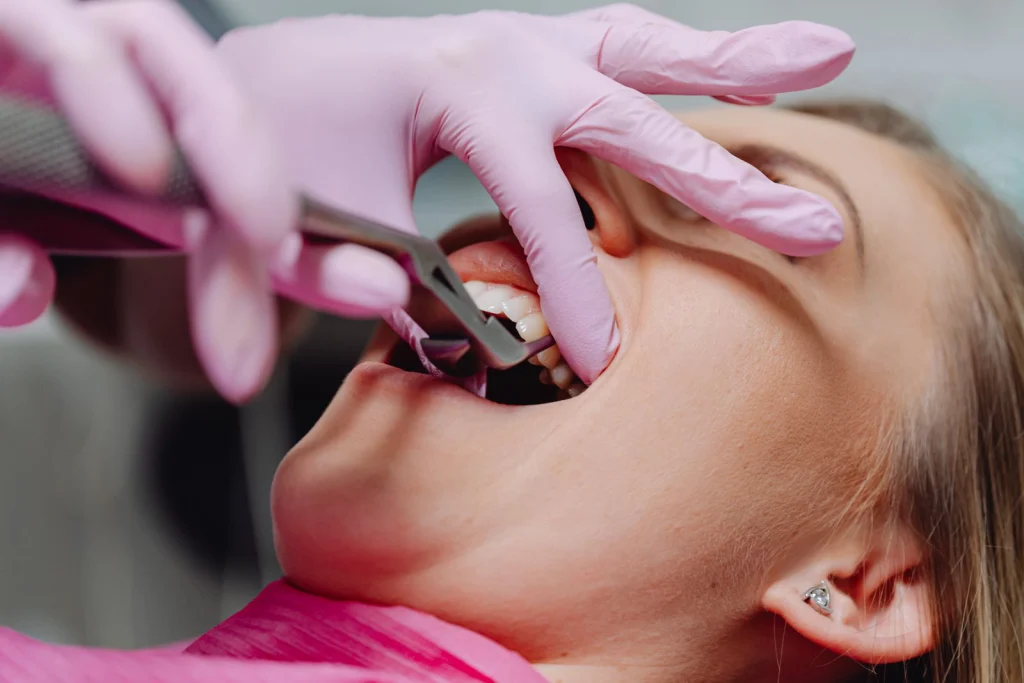
Put the tooth in milk and call the office, or any dentist, immediately. Time is of the essence: a knocked-out tooth can be saved if you are seen quickly enough. Knocked-out teeth can be treated for patients of any age, and cuts from the injury can be stitched. For step-by-step first aid, read what to do in the first hour of a dental emergency.
A suspected broken jaw
If you think your jaw may be broken, get help right away. At the practice, a CT scan helps locate the fracture.
4. Acute TMJ pain or a locked jaw
The temporomandibular joint connects your lower jaw to your skull. A jaw can lock open or closed after trauma or a sudden bout of acute pain, and TMJ problems can show up as migraine headaches and severe pain that interrupts your life.
What to do
Call the office. A locked jaw should be treated as urgent. Medications and emergency NTI splints are often used for acute TMJ pain, and a locked jaw can be fixed nearly all the time. For ongoing jaw pain and headaches, see TMJ treatment.
5. A simple toothache or broken crown
A toothache from a deep cavity or sensitive gums, or a broken temporary or permanent crown, is usually the least urgent of the five. If the pain is manageable, it is typically best handled at the next available appointment. Call anyway: the team can talk through your symptoms and help you decide how soon you need to be seen.
If a temporary crown comes off
You can place a little Fixodent, available at any pharmacy, inside the temporary, put it back on and call the office during business hours to have it re-cemented. Do not leave the temporary off, even if the tooth feels fine, because the teeth can shift.
If your pain is more of a sharp twinge with hot or cold, read sensitive teeth: causes and treatment.
Emergency now, or next available appointment?
- Call right away: facial swelling, a suspected abscess, a knocked-out tooth, a deep or painful crack, a possible broken jaw, a locked jaw or severe TMJ pain.
- Call today and book the next available appointment: a manageable toothache, a small chip without pain, or a loose or broken crown.
- Go to the emergency room: swelling that makes it hard to breathe or swallow, or bleeding you cannot control.
Who can be seen, and when
Dr. Haywood is available anytime for true dental emergencies for existing patients and their friends and families. New patients with emergency needs can be seen on weekdays during normal business hours, based on the schedule’s availability.
Call as early in the day as you can, so the practice can care for you around scheduled patients. Do not wait until Friday afternoon or the end of the day, when offices may be closing. Hours are Monday 8:30 AM to 6:30 PM, Tuesday 8:30 AM to 5 PM, Wednesday 8:30 AM to 3:30 PM, Thursday 8:30 AM to 4:30 PM and Friday 8:30 AM to 4 PM, closed on weekends.
If you have not seen a dentist recently, the standard of care calls for the necessary X-rays and a thorough exam before treatment. Dr. Haywood then explains all of your options based on what they show. If you choose to become a patient, a full work-up with X-rays, an exam and initial periodontal and hygiene care is required.
After emergency treatment
Follow the post-op instructions for your procedure. After an extraction, some pain and swelling is normal; an ice pack helps keep swelling down, and it usually subsides after 48 hours. If you have heavy bleeding, severe pain, swelling that continues for 2–3 days or a reaction to medication, call the office immediately.
Paying for emergency care
Emergency care is paid at the time of service. The practice is out of network with all dental insurance companies, and the office files the claim on your behalf so your plan can reimburse you for what it covers. Health savings and flex plans are welcome, and financing is available through CareCredit, with no-interest options for up to 12 months, and Cherry, with payment plans from 3 to 24 months. See financing options.
Frequently asked questions
Is a chipped tooth a dental emergency?
A small chip without pain is usually not urgent, but call to have it checked. A deep crack, a painful break or a tooth broken by an injury needs attention quickly.
Can antibiotics cure a tooth abscess?
Antibiotics can slow the spread of infection, but you still need dental treatment. A root canal or an extraction can resolve abscess pain.
What should I do with a knocked-out tooth?
Put it in milk and call immediately. A knocked-out tooth can be saved if you are seen quickly enough.
Do you see new patients for dental emergencies?
Yes, on weekdays during normal business hours, based on availability. Call as early in the day as you can.
Call early for dental emergencies in Timonium
If you are in dental pain, do not wait for it to get worse. Call (410) 453-9399 as early in the day as you can, or request an appointment for a less urgent problem. The office of Dr. Steven W. Haywood, DDS is at 108 W Timonium Rd, Ste 200, Timonium, MD 21093, serving Timonium, Towson, Pikesville and Baltimore. Test what you know with the dental emergency quiz.
Ready to see your future smile?
In dental pain? Call the Timonium office early in the day.