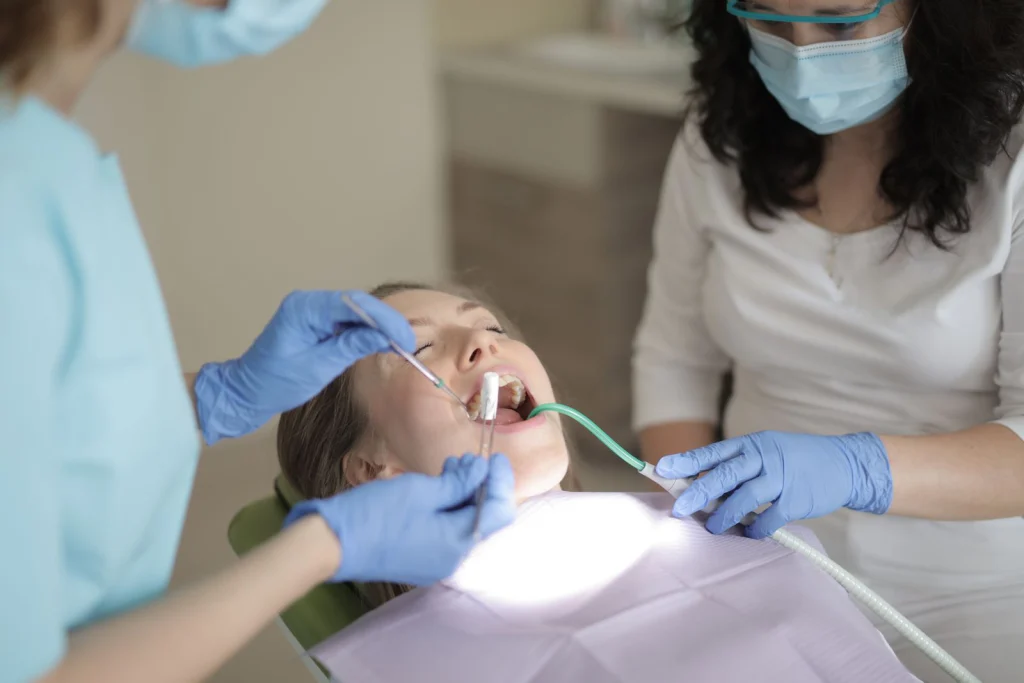
When your teeth feel fine, a dental checkup is easy to cancel. But the three problems a checkup is best at finding are receding gums, early tooth decay and oral cancer, and all three usually cause no pain in their early stages. By the time they hurt or show, treatment is often bigger than it had to be. That is the short answer to why you should not skip a dental checkup, even in a busy month.
Below are those three reasons in more detail. You’ll also find what happens at a checkup with Dr. Steven W. Haywood, DDS in Timonium, honest answers to the most common reasons people cancel, and what to do if you have already missed a visit or two.
“But my teeth feel fine”
Pain is a late warning sign in the mouth. Enamel has no nerves, gums can pull back without any discomfort, and early changes in the soft tissues are often painless. Feeling fine is good news, but it is not the same as being healthy. A checkup is how you find out which one applies to you.
That is also why putting a visit off “just until something bothers me” tends to backfire. The first thing you notice is usually the last stage of a problem that started months or years earlier.
Reason 1: Gum recession and gum disease move quietly
Gum tissue rarely recedes all at once. It tends to move back a little at a time, so slowly that most people never notice the change in the mirror. As gums recede and pockets deepen between the gums and teeth, bacteria collect where a toothbrush cannot reach. Over time, the bone that holds your teeth in place can be affected too.
Signs that are easy to dismiss
- Gums that bleed a little when you brush or floss
- Teeth that look slightly longer than they used to
- Sensitivity near the gumline
- Bad breath that keeps coming back
- Sore or swollen gums, or painful chewing
On their own, these signs don’t necessarily mean gum disease, but they are a good reason to have your gums checked. Periodontal disease is the leading cause of tooth loss in adults, and it worsens as it progresses through its stages. Caught early and treated as a serious infection, it can be managed and controlled.
What the checkup adds
At a routine visit, the hygienists check your gums with careful measurements, so small changes can be recorded and compared over time. If gum disease is found, care at the practice is non-surgical. Scaling and root planing removes harmful bacteria from beneath the gums, and oral DNA testing can identify which periodontal pathogens are present, so treatment can be more accurate. Read the five warning signs of gum disease or learn about gum disease treatment.
Reason 2: Tooth decay can be hiding
Cavities start when acids produced by plaque bacteria soften the enamel. That early stage usually doesn’t hurt. Many people only feel a cavity once it has worked through the enamel into the softer layer beneath, closer to the nerve. By then the tooth has a hole that needs repair, and a larger cavity means a larger filling, or in some cases a crown or a root canal.
Finding decay before you feel it
A checkup is designed to catch decay while it is still small:
- Digital X-rays show decay between teeth and around old fillings that can’t be seen by looking. They appear on screen right away and use less radiation than standard dental X-rays.
- DIAGNOdent laser detection can find decay at its earliest stages, sometimes before it shows on an X-ray.
- Intraoral cameras zoom in on each section of your mouth, so you can see what Dr. Haywood sees.
A cavity caught early usually needs only a filling. At the practice, fillings are tooth-colored, mercury-free composite, and air abrasion can remove small areas of decay quickly and quietly, with no heat, pressure or vibration. Read why it’s better to prevent a cavity than fill one.
Reason 3: An oral cancer screening is part of the visit
Oral cancer can begin as a small patch, sore or color change that doesn’t hurt, often in places that are hard to see on your own, such as under the tongue or toward the back of the mouth. Early detection is critical, and a checkup is one of the few times someone trained to look examines those tissues closely.
An oral cancer screening is part of your regular check-up at the Timonium office. It is easy and doesn’t take much time. The office uses ViziLite, which helps make abnormal cells in the soft tissues of the mouth easier to see, and recommends that all patients over eighteen be screened every year. Alcohol, infection, the HPV virus and smoking have all been implicated in oral cancer. If anything looks unusual, non-surgical techniques such as t-blue staining and Oral CDX cellular analysis are also available in the office. Learn more about oral cancer screening.
What happens at a checkup here
- A conversation. Dr. Haywood reviews your dental concerns, your health history and medications, and whether dental visits make you nervous.
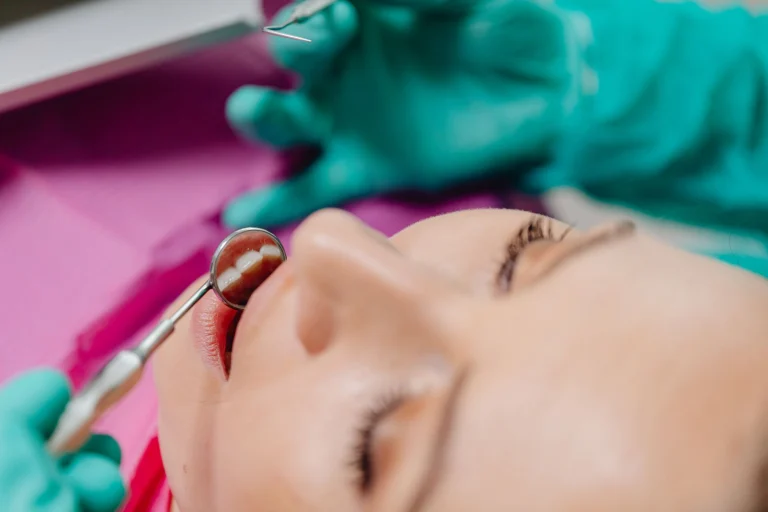
- A thorough exam. Your teeth and gums are evaluated, X-rays and photos are taken as needed, and your bite is checked for signs of TMJ problems or grinding wear.
- A full 60-minute cleaning. Cleaning appointments last a full hour, so the hygienist has time to remove plaque and tartar thoroughly instead of rushing. The practice strives for zero bleeding and zero infection.
- A clear plan. Your X-rays appear on screen, and if anything needs attention, Dr. Haywood explains the options. Sometimes that simply means flossing more often in one area. Sometimes it means a filling or gum care. Either way, you leave knowing where you stand.
A professional cleaning every six months is the recommended starting point, and some people need to be seen more often. Read how often you should get a dental checkup.
Common reasons people cancel, and what helps
“I’m too busy this month”
Moving a visit is better than canceling it outright. If you need to change an appointment, the office asks for at least 72 business hours’ notice, and you can choose a new time on the same call. The office is open Monday 8:30 AM to 6:30 PM, Tuesday 8:30 AM to 5 PM, Wednesday 8:30 AM to 3:30 PM, Thursday 8:30 AM to 4:30 PM and Friday 8:30 AM to 4 PM.
“I’m nervous about what they’ll find”
That worry is common, and skipping visits tends to make it grow. Laughing gas is offered as a complimentary service, oral and IV sedation are available, and the spa-like office offers comforts such as paraffin wax hand treatments and aromatherapy. If it has been years, read been a while since you’ve visited a dentist?
“I’m worried about the cost”
Finding a small problem early usually means simpler treatment than waiting until it hurts. Your options and their costs are explained before any treatment begins, and payment options are covered below.
“I don’t want fluoride or mercury fillings”
You don’t have to accept either. The practice is mercury-free and avoids fluoride, offering calcium rebuilding treatments instead to help strengthen enamel for patients of all ages. Learn about holistic dentistry at the practice.
Already skipped a checkup?
Missing a visit isn’t a disaster. The goal is to get back on schedule before small problems have time to grow. Call and book the next available checkup, and tell the team if anything has changed since your last visit: new medications, a tooth that feels different, gums that bleed, or a sore that hasn’t healed.
If a tooth hurts or your face is swelling, don’t wait for a routine visit. Call as early in the day as you can so the practice can care for you around scheduled patients. See emergency dental care.
Paying for your checkup
The practice is out of network with all dental insurance providers. You pay at the time of your visit, and the office files the claim on your behalf so your plan can reimburse you for whatever it covers. Health savings and flex plans are welcome, and financing is available through CareCredit, with no-interest options for up to 12 months, and Cherry, with plans from 3 to 24 months. See financing options.
Frequently asked questions
Is it bad to skip one dental checkup?
One missed visit rarely causes harm by itself, but it gives quiet problems like early decay and deepening gum pockets more time to grow. Rebook as soon as you can instead of waiting for your next usual date.
Do I need a checkup if nothing hurts?
Yes. Early decay, gum recession and early oral cancer often cause no pain at all. Finding them before they hurt is the reason checkups exist.
How long is a cleaning appointment?
Cleaning appointments at the practice last a full 60 minutes, which leaves time for a thorough cleaning and a careful look at the health of your gums.
Can the whole family come to the same office?
Yes. Family dentistry is part of the practice. A parent or legal guardian must be present during the consultation of a patient under 18. Read has your child visited a dentist?
Book the checkup you’ve been putting off
If your last checkup was longer ago than you would like, now is a good time to get back on track. Request an appointment or call (410) 453-9399. The office of Dr. Steven W. Haywood, DDS is at 108 W Timonium Rd, Ste 200, Timonium, MD 21093, serving Timonium, Lutherville, Cockeysville, Towson and Hunt Valley. New patients are always welcome, and forms can be completed online before your first visit. Learn more about general dentistry in Timonium.
Ready to see your future smile?
Book the checkup you've been putting off at our Timonium office.