Headlines about dental breakthroughs tend to focus on the future: regrowing teeth, artificial intelligence, new filling materials. Some of that research is genuinely interesting, but most of it is not something you can book yet. The advances that change a dental visit today are quieter ones: 3D imaging, digital X-rays, laser decay detection and computer planning that let a dentist find problems earlier and plan treatment more precisely.
This post covers the dental technology already in use at the Timonium office of Dr. Steven W. Haywood, DDS, what each tool means for you as a patient, and then, clearly labelled, a few broader trends the dental profession is exploring that are still on the horizon.
Breakthroughs you can use now vs. ones still on the horizon
It helps to separate two things. The first is technology that is proven, available and part of everyday care, such as cone beam computed tomography (CBCT) and digital X-rays. The second is research and emerging ideas that may shape dentistry in the future but are not treatments offered at the practice. Both are worth knowing about, but only the first should affect your treatment decisions today.
Dental technology already in use at the Timonium office
Digital X-rays
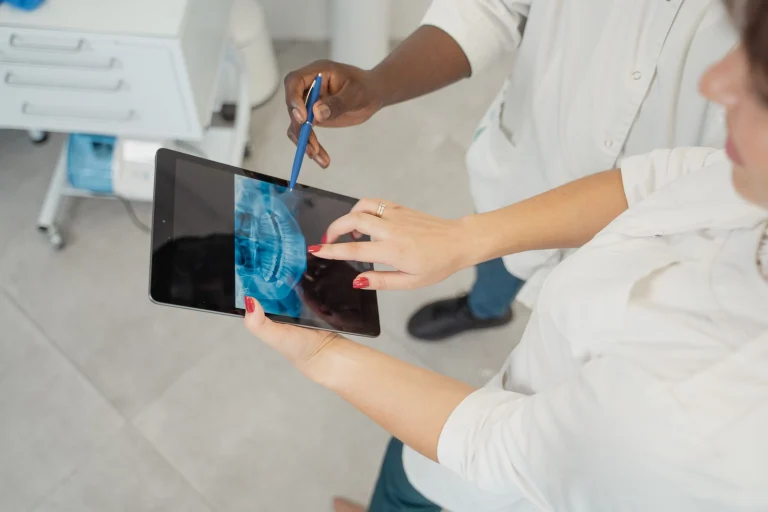
Digital X-rays appear on screen immediately, so Dr. Haywood can show you what the team sees and explain your options right then. They emit even less radiation than standard dental X-rays, with as much as 90 percent less exposure than film, and they are more comfortable than biting down on hard film. Clear, enhanced images help spot decay, infection and other problems early.
Intraoral cameras
An intraoral camera lets the team zoom in on each section of your mouth and spot issues that would otherwise be hidden. Seeing a cracked filling or an area of concern on screen makes it much easier to understand why a treatment is being recommended.
DIAGNOdent laser decay detection
DIAGNOdent is a laser pen that can detect small amounts of decay at the earliest stages, sometimes before it can be seen on an X-ray. It can reveal mild problems before any discomfort develops, so there are fewer surprise cavities.
3D cone beam CT imaging
A cone beam CT scan takes a three-dimensional image instead of the flat, two-dimensional picture of a conventional dental or panoramic X-ray. Software reconstructs your bone structure within minutes, showing the quantity and quality of bone. The practice uses a Green CT scanner developed by VATECH, which emits a much lower dose of radiation than less eco-friendly scanners, and the in-office scan takes no longer than a panoramic X-ray. CBCT is used to plan implants, to assess existing root canals in far more detail than a flat X-ray shows, and as part of evaluating the jaw joint when a TMJ problem is suspected.
Computer-guided implant surgery
Where an implant sits matters for how it serves you. With guided surgery, the team places your implant virtually in the 3D model first, to simulate what is possible. Once you accept treatment, the plan is sent to a surgical guide manufacturer, made on a 3D printer in about 2 to 3 weeks, and approved by Dr. Haywood. During surgery the guide carries the plan, so the implant goes where it was positioned on the computer. The scan also shows at that same visit whether bone grafting is needed. Not every implant needs a guide, and whether one is right for you is part of your treatment plan. Read about computer-guided implant surgery.
Cosmetic imaging and 3D scans
Before cosmetic treatment, digital photographs of your smile are evaluated and changed on the imaging computer, giving you a before-and-after preview so you and Dr. Haywood can plan the result together. These demonstrations are part of every cosmetic evaluation at the practice. The iTero Element intraoral scanner creates a detailed 3D visual of your teeth in about 2½ minutes, with less tendency toward gagging, and can simulate what your results may look like. See cosmetic imaging in Timonium.
Oral DNA testing
Oral DNA testing identifies which of the 11 most suspected periodontal pathogens are present, so gum disease can be diagnosed and treated more accurately rather than as one generic condition.
What this technology changes for patients
- Early detection. Digital X-rays, DIAGNOdent and CBCT help find decay, infection and bone problems while they are easier to treat.
- Seeing your own mouth. Images on screen mean you understand your options instead of taking them on faith.
- Less guesswork. 3D imaging and virtual implant placement show what is possible before treatment starts.
- Patient comfort. Less radiation, no hard film, quicker scans with less gagging, and laser gum therapy that is less invasive and more comfortable.
- Previewing results. Cosmetic imaging lets you plan changes to your smile before you commit.
See every tool on the dental technology page.
On the horizon: broader trends in dentistry
The trends below are general areas that researchers and the wider dental profession are exploring. They are not treatments offered at the practice, and no products or timelines are implied.
Artificial intelligence in dental imaging
Software that uses machine learning to help read dental X-rays and scans is an active area of development. The idea is a second set of eyes that flags areas worth a closer look. Even as these tools develop, a dentist still examines the patient, interprets the findings and makes the treatment decision.
Materials that work with the tooth
Researchers are studying restorative materials designed to interact with the tooth, for example by helping to replace lost minerals, rather than simply filling a space. For now, the practice uses tooth-colored composite fillings and other mercury-free, biocompatible materials, chosen for your body rather than for cost or convenience.
Can teeth regrow?
Research into regenerating tooth tissue gets a lot of attention, and it is a fascinating field. There is no tooth-regrowing treatment available at the practice, and no one can responsibly promise when, or whether, one will reach dental offices. If a tooth is missing today, proven options such as dental implants exist.
More connected home care
Smart toothbrushes and apps that track brushing habits are becoming more common. They may help some people build better routines. They do not replace professional cleanings or an exam.
More digital workflows
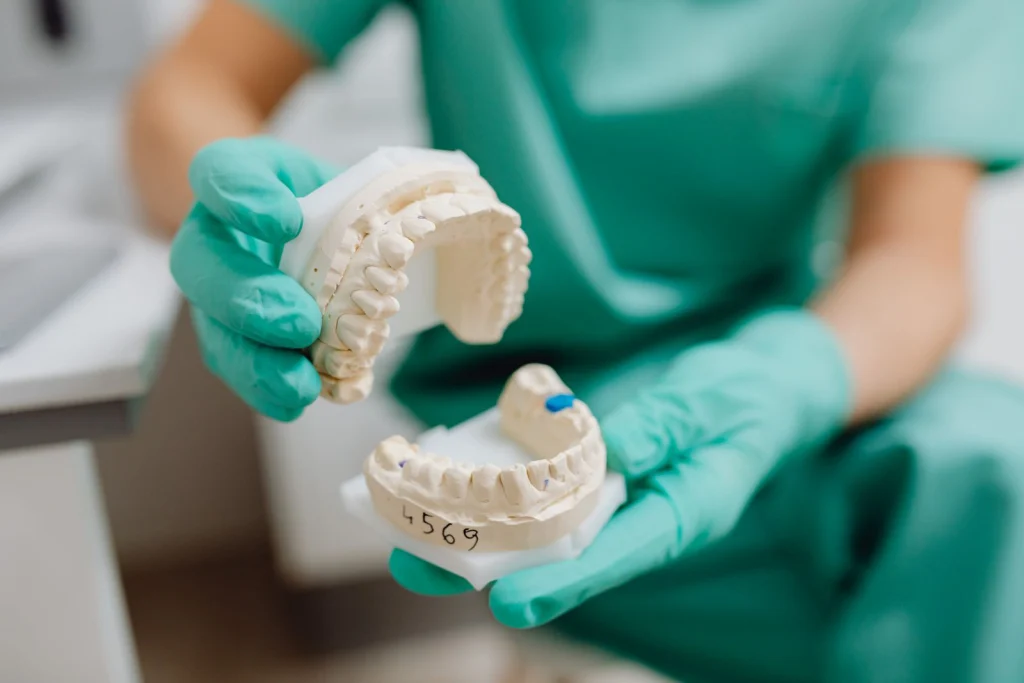
Across dentistry, digital impressions, 3D design and 3D printing for crowns, bridges and dentures continue to spread. The practice already uses 3D scans with the iTero Element scanner and 3D-printed surgical guides for guided implant surgery.
Technology is a tool, not the whole answer
Equipment supports good care, but judgment decides it. Dr. Steven W. Haywood, DDS has more than 35 years of experience. Dr. Haywood graduated with distinction from the University of Detroit dental school in 1987, completed the U.S. Air Force advanced residency program, is a Fellow of the International Congress of Oral Implantologists, and trained further at NYU’s Aesthetic Continuum and the Peter Dawson Institute. Every one of these services is available in the same Timonium office, alongside general dentistry such as 60-minute cleanings and oral cancer screening.
Paying for your care
The practice is out of network with all dental insurance providers. You pay at the time of your visit, and the office files the claim on your behalf so your plan can reimburse you for whatever it covers. Health savings and flex plans are welcome, and financing is available through CareCredit, with no-interest options for up to 12 months, and Cherry, with plans from 3 to 24 months. See financing options.
Keep reading
For more on prevention, gum health and treatment options, browse the Dr. Haywood blog, including the benefits of laser dentistry.
Frequently asked questions
What is the newest dental technology I can get at the practice?
The Timonium office uses digital X-rays, intraoral cameras, DIAGNOdent laser decay detection, a low-dose Green CT 3D scanner, computer-guided implant surgery, cosmetic imaging, the iTero Element scanner, oral DNA testing and the Picasso laser.
Is a 3D dental scan safe?
The practice’s Green CT scanner emits a much lower dose of radiation than less eco-friendly scanners, and the dose is extremely small compared with a CT scan in a hospital. The scan takes no longer than a panoramic X-ray.
What is the newest technology that can regrow teeth?
Regenerating teeth is still a research topic, and no such treatment is offered at the practice. Missing teeth can be replaced today with options such as dental implants.
Does every implant need a surgical guide?
No. A guide matters most when there is little bone, a specific angle is needed, or several implants must line up. Whether a guide is right for you is part of your treatment plan.
See the technology for yourself in Timonium
If you are due for a check-up or want to talk through a treatment plan with modern imaging, request an appointment or call (410) 453-9399. The office of Dr. Steven W. Haywood, DDS is at 108 W Timonium Rd, Ste 200, Timonium, MD 21093, and patients come from Timonium, Towson, Hunt Valley, Baltimore and Shrewsbury, PA.
Ready to see your future smile?
See the dental technology used in Timonium at your next check-up.