A dental crown rarely comes off without warning. Before it lets go, a loosening crown often moves slightly when you chew, leaves a bad taste around one tooth, turns sensitive to cold or sweets, or starts catching your floss. If you notice any of these signs, call your dentist before the crown falls out. A crown that is loose but still in place can sometimes be cleaned and bonded back on while the tooth beneath it is still sound, and waiting gives decay and cracks time to spread.
This guide from the Timonium office of Dr. Steven W. Haywood, DDS covers the warning signs of a loose crown, why crowns loosen, how a loose temporary, permanent crown, bridge or implant bridge differs, and what to do until you can be seen. If your crown has already come out, start with filling or crown fell out? what to do next.
Warning signs your crown is coming loose
The crown moves or clicks
A secure crown feels like part of the tooth. If you feel it shift when you bite, rock when you press it with your tongue, or make a faint click, the seal between the crown and the tooth has probably broken down.
A bad taste or odor around one tooth
When the seal at a crown’s edge fails, saliva, food and bacteria can seep underneath. That trapped material can cause a sour taste or an odor that seems to come from one spot, even right after you brush.
New sensitivity
A tooth under a crown that suddenly reacts to cold drinks, hot food or sweets may be exposed where the crown no longer seals. Sensitivity can also mean decay has started beneath the crown.
Floss that catches or shreds
If floss snags, frays or tears at the edge of a crown where it used to slide smoothly, there may be a gap, a rough edge or decay along the margin.
Pain when you bite
Pain on chewing can come from a loose crown flexing on the tooth, but it can also mean the tooth underneath has cracked. Either way, it needs to be examined.
A sore or puffy gum around the crown
Food and bacteria collecting at a gap can irritate the gum around one crown, making it tender, swollen or quick to bleed.
A visible edge or dark line at the gumline
If gums recede, the edge of a crown or the root surface beneath it can show. An exposed edge is not always a problem on its own, but it is a spot where decay can start, so it is worth having checked.
Why crowns loosen
- Decay under the crown. A crown can’t decay, but the tooth underneath can. As decay spreads beneath the edge, the crown loses the healthy tooth it was bonded to.
- A worn or broken seal. Over years of chewing, the seal at the edge can wear, letting bacteria in.
- Grinding and clenching. Grinding and clenching place excessive force on teeth and dental work, and can crack teeth.
- Sticky foods. Caramel, taffy and chewy candy can tug on crowns, especially temporary ones.
- A crack in the tooth. A tooth that cracks beneath the crown can no longer hold it firmly.
- Gum recession. Receding gums expose root surfaces near the crown edge that are more vulnerable to decay.
Temporary crown, permanent crown, bridge or implant bridge?
A loose temporary crown
Temporary crowns are made to come off easily, and a little looseness is common. If a temporary comes off, place some Fixodent, available at any pharmacy, inside it, put it back on and call the office during business hours to have it re-cemented. Don’t leave it off, even if the tooth feels fine: without it, your teeth can move and the permanent crown may no longer fit. To help it stay put, avoid sticky foods and pull floss out the side instead of popping it up through the contact.
A loose permanent crown
Call the office and describe what you notice. Avoid chewing on that side and don’t wiggle the crown to test it. If it comes off, keep it in a small container and bring it with you.
A loose bridge
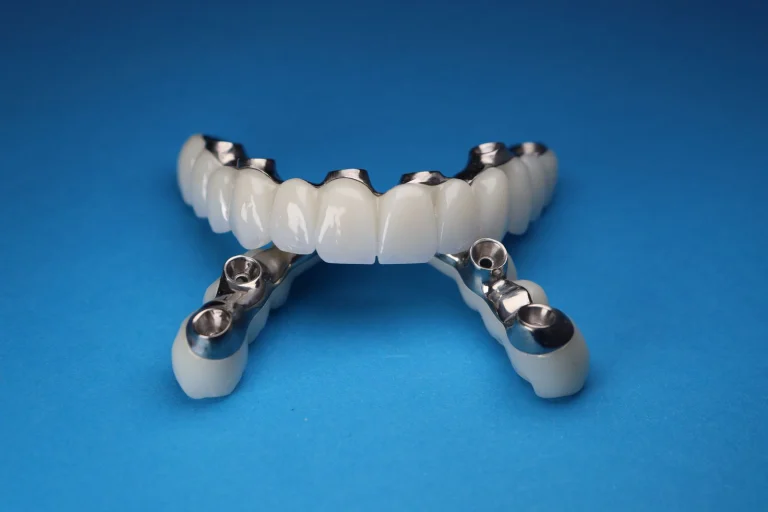
A fixed bridge is attached to crowns on the teeth beside a gap and can only be removed with professional equipment. If a fixed bridge moves, one of those anchor teeth may have lost its seal or developed decay, so call for an exam. Learn about dental bridges.
A loose implant bridge
Implant bridges may be screwed or cemented in place, and either kind can occasionally come off. Patients who are current with their regular care will always have the bridge serviced at no cost. See the implant bridge.
What to do until you are seen
- Call early in the day at (410) 453-9399 so the practice can fit you in.
- Chew on the other side and skip sticky, hard and chewy foods.
- Keep the area clean. Brush gently around the crown and rinse with warm salt water.
- Don’t use household glue on a permanent crown. It can damage the tooth and the crown.
- Save the crown if it comes out, and bring it to your visit.
A loose crown is usually best handled at the next available appointment. Call right away if you have facial swelling, severe or throbbing pain, or a tooth that broke along with the crown. Dr. Haywood is available anytime for true dental emergencies for existing patients and their friends and families, and new patients with emergency needs can be seen on weekdays during normal business hours, based on availability. See emergency dental care.
What Dr. Haywood checks
If you haven’t seen a dentist recently, the standard of care calls for the necessary X-rays and a thorough exam before treatment. Digital X-rays show decay under the crown, and intraoral camera images let you see the edge of the crown on screen. Depending on what they show:
- The crown may be bonded back on if it and the tooth beneath are sound.
- A new porcelain crown may be needed if there is decay or a break. Crowns are usually made in two appointments, with a temporary in between.
- Root canal therapy may be needed if decay has reached the pulp, followed by a porcelain crown.
- Replacing the tooth is rarely needed, but when a tooth can’t be saved, your options for filling the gap are discussed.
Keeping crowns secure
- Brush twice a day and clean between your teeth daily, paying attention to where each crown meets the gum.
- Ask about a custom bite guard if you grind or clench.
- Avoid chewing ice and opening packages with your teeth.
- Call for a bite adjustment if a crown ever feels like it hits first or harder.
- Keep checkups every six months, so a worn edge is found before the crown loosens.
Read crowning achievements: what dental crowns endure for more on what a crown faces every day.
Paying for crown repairs
The practice is out of network with all dental insurance companies. You pay at the time of your visit, including emergency care, and the office files the claim on your behalf so your plan can reimburse you for what it covers. Health savings and flex plans are welcome, and financing is available through CareCredit, with no-interest options up to 12 months, and Cherry, with plans from 3 to 24 months. See financing options.
Frequently asked questions
Can a loose crown be fixed without replacing it?
Often, if the crown is intact and the tooth underneath is healthy. An exam and X-rays show whether it can be bonded back on or a new crown is needed.
Is a loose crown an emergency?
Usually not, and it is best handled at the next available appointment. Call right away for swelling, severe pain or a broken tooth.
Why does the area around my crown smell?
A bad odor or taste around one crown can mean food and bacteria are getting under a failing seal. It is a good reason to have the crown checked.
Can I keep eating normally with a loose crown?
Chew on the other side and avoid sticky, hard and chewy foods until the crown has been examined, so it doesn’t come off or crack the tooth.
Get a loose crown checked in Timonium
If a crown feels loose or different, request an appointment or call (410) 453-9399. The office of Dr. Steven W. Haywood, DDS is at 108 W Timonium Rd, Ste 200, Timonium, MD 21093, serving Timonium, Cockeysville, Hunt Valley, Towson and Baltimore. Learn more about dental crowns and restorative dentistry.
Ready to see your future smile?
Crown feel loose? Book a visit in Timonium before it comes off.