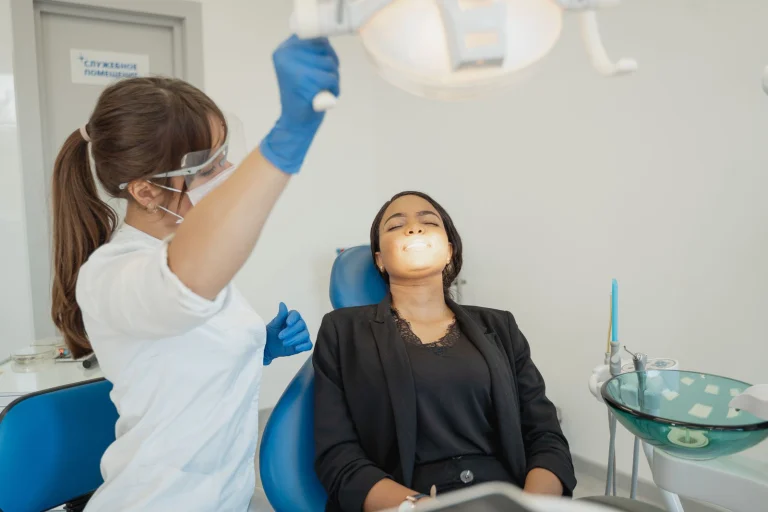

A bright smile and a healthy smile are often treated as two separate projects: one for the hygienist, one for the cosmetic dentist. In practice they depend on each other. Whitening, bonding and veneers look their best on healthy gums and sound teeth, and many cosmetic treatments also repair and protect the teeth they improve. At the Timonium office of Dr. Steven W. Haywood, DDS, both sides of that work happen in one practice, planned by one dentist who knows your whole mouth.
This post explains how health and beauty support each other, what each side of the practice contributes, and the order that usually makes sense when you want a smile that is both bright and healthy.
Why bright and healthy belong together
People tend to judge a smile by the color and shape of the teeth. But the frame around those teeth matters just as much, and what lies beneath a pretty surface decides how long any improvement lasts.
Health shows in a smile
Gums that are swollen, red or bleeding draw the eye, even next to white teeth. Tartar along the gum line looks yellow or brown. A dark shadow under an old filling can be a stain, or it can be decay that has worked its way underneath. None of these are fixed by whitening, and all of them are easier to treat when they are found early.
Cosmetic work lasts on a healthy foundation
Veneers, bonding and crowns are attached to natural teeth and sit against the gums. If the gums are infected or a tooth has active decay, new work is being placed on an unstable base. That is why a thorough exam and any needed care for gums and decay come before cosmetic treatment, not after it. It is also why the best candidates for a smile makeover start with healthy gums and a stable bite.
What the health side does for a bright smile
General and preventive dentistry is the everyday side of the practice, and it quietly does a lot for the way your smile looks.
- Unhurried cleanings. Routine visits here are unhurried and focused on prevention. Removing plaque and tartar that brushing and flossing miss keeps gums healthy and the tooth surface clean. Learn more about dental cleanings and preventive care.
- Early detection. Digital X-rays and DIAGNOdent laser detection help find decay at its earliest stages, sometimes before it shows on an X-ray. A cavity caught early usually needs only a small tooth-colored filling rather than larger work.
- Gum care. Bleeding or receding gums and bad breath can signal gum infection. Care here is non-surgical, with scaling and root planing, periodontal maintenance and oral DNA testing to identify which bacteria are present. See gum disease treatment.
- Protection from grinding. Grinding slowly wears down and cracks enamel, often without you noticing. Clear, comfortable bite guards custom-made for you help protect both natural teeth and cosmetic work.
- Enamel support without fluoride. The practice avoids fluoride and offers calcium rebuilding treatments to help strengthen enamel instead, along with super sealants for the pits and grooves of chewing surfaces.
- Oral cancer screening. ViziLite screening is part of your regular check-up, so anything unusual in the soft tissues of the mouth is looked at early.
What the cosmetic side does for a healthy smile
Cosmetic dentistry is often described as purely about looks. Many of the treatments on the cosmetic dentistry in Timonium page do more than that.
- Dental bonding repairs chips, fractures and discoloration with tooth-colored composite resin, and it can be used as an alternative to amalgam fillings. It is often done in a single visit and typically needs no anesthesia. See dental bonding.
- Porcelain veneers partially wrap around a tooth like a suit of armor, protecting and strengthening it. Prepless veneers can strengthen chipped teeth without crowning them while keeping most, if not all, of your natural enamel.
- Porcelain crowns restore the shape of a damaged tooth, protect what remains and can save a tooth that would otherwise need to be pulled. Learn about dental crowns.
- Straightening with Invisalign is not only cosmetic. With proper alignment and a correct bite, biting pressure is spread evenly across the teeth, and straight, uniform teeth are easier to keep clean.
- A gum lift moves the gum line upward on the upper teeth when extra gum tissue makes teeth look short, using a dental laser or radiosurgery.
Trading silver fillings for tooth-colored ones
For many adults, the most noticeable thing about their smile is not stains but the dark metal of old fillings when they laugh or open wide. The practice is mercury-free and never places amalgam fillings. Tooth-colored composite fillings bond to the tooth and blend in, and all-ceramic, tooth-colored crowns are used when a tooth needs more coverage.
Whether an old silver filling should be replaced now depends on its condition and the tooth around it, which is something to talk through at your exam. For a side-by-side look at the materials, read white fillings vs. silver fillings, and see how the practice approaches mercury-free dentistry.
Why patients choose Dr. Haywood as their dentist for both
Having one dentist look after your cleanings, gum health, fillings and cosmetic work means nothing falls between two offices. The person planning your veneers already knows how your gums respond, whether you grind your teeth and how your older dental work is holding up.
- Training on both sides. Dr. Haywood graduated with distinction from the University of Detroit dental school, trained in cosmetic dentistry at New York University’s Aesthetic Continuum, and continues advanced TMJ and reconstructive training at the Peter Dawson Institute. Dr. Haywood is a member of the American Academy of Cosmetic Dentistry, a Fellow of the International Congress of Oral Implantologists and an Elite Invisalign Provider.
- A conversation first. Every visit starts with a conversation, not a drill. You hear what needs doing, what can safely wait and what it costs before anything begins.
- You see what the dentist sees. X-rays appear on screen and intraoral cameras zoom in, so health findings and cosmetic ideas are explained with pictures of your own teeth.
- Familiar faces. You see the same team at every visit, so you never have to explain yourself twice.
Read more about Dr. Steven Haywood.
A healthy-first path to a brighter smile
Every plan is personal, but a bright and healthy smile usually comes together in this order:
- Talk and examine. Your first visit covers your concerns, health history and medications, then a careful exam with X-rays, photos, a look at your bite and an oral cancer screening.
- Treat health needs first. Gum infection, decay and failing fillings are handled before cosmetic work, so new work is placed on a sound base.
- Preview the cosmetic change. With cosmetic imaging, digital photos of your smile are changed on the imaging computer, so you and Dr. Haywood can plan the improvements together.
- Move, then brighten, then reshape. If teeth need to move, Invisalign can shift them first. Whitening comes before new tooth-colored work, because whitening lightens natural enamel but not porcelain or composite, so new work is matched to your brighter shade.
- Protect the result. Bite protection is recommended for cosmetic work. Limiting staining foods, whitening routinely and keeping up with home care and professional visits help your smile stay bright and healthy.
Paying for health and cosmetic care
The practice is out of network with insurance companies. You pay at the time of your visit, and the office files the claim on your behalf so your plan can reimburse you for covered care. Many plans treat preventive and restorative care differently from purely cosmetic treatment, so it helps to ask your plan what it covers. HSA and flex plans are welcome, and financing is available through CareCredit, with no-interest options for up to 12 months, and Cherry, with plans from 3 to 24 months.
Frequently asked questions
Should I get a cleaning before teeth whitening?
It is a good idea to have a check-up before whitening. An exam can find cavities, gum problems and old dental work that will not whiten, so you know what to expect. For more reasons, read reasons to visit a dentist before whitening, and see how in-office teeth whitening works.
Can I have cosmetic dentistry if I have gum disease?
Gum health comes first. Gum infection is treated and brought under control before veneers, bonding or other cosmetic work, so the result looks good and holds up. Once your gums are healthy, cosmetic treatment can be planned.
Do tooth-colored fillings and bonding stain?
Composite resin can pick up stains over time, unlike porcelain. Brushing, or at least rinsing with water, after cola, coffee, tea or red wine helps. Porcelain veneers and crowns resist stains better than natural teeth or composite.
Does the practice use fluoride?
No. The practice avoids fluoride and offers calcium rebuilding treatments to help strengthen enamel, along with super sealants and xylitol mints and lollipops that help reduce decay risk.
Start your bright and healthy smile in Timonium
Whether your first goal is healthier gums or whiter teeth, one visit can map out both. Request an appointment or call (410) 453-9399. The office of Dr. Steven W. Haywood, DDS is at 108 W Timonium Rd, Ste 200, Timonium, MD 21093, serving Timonium, Towson, Pikesville and Baltimore, and new patients are welcome.
Ready to see your future smile?
Plan a smile that is healthy first and bright to match, all in one Timonium office.