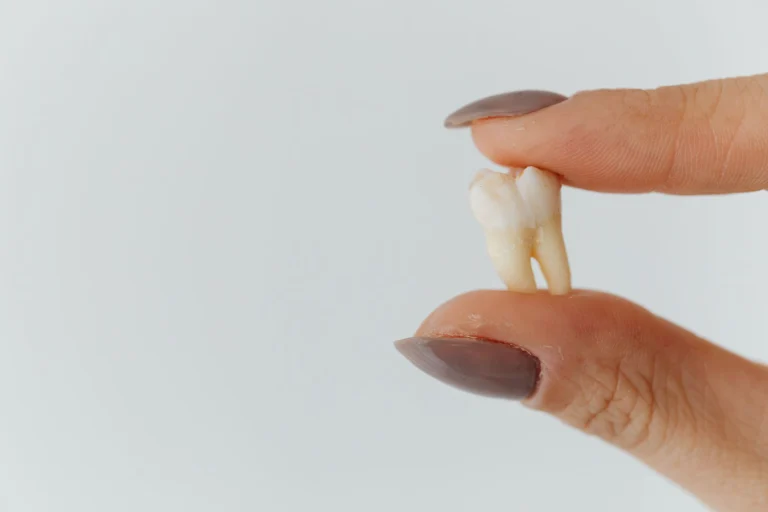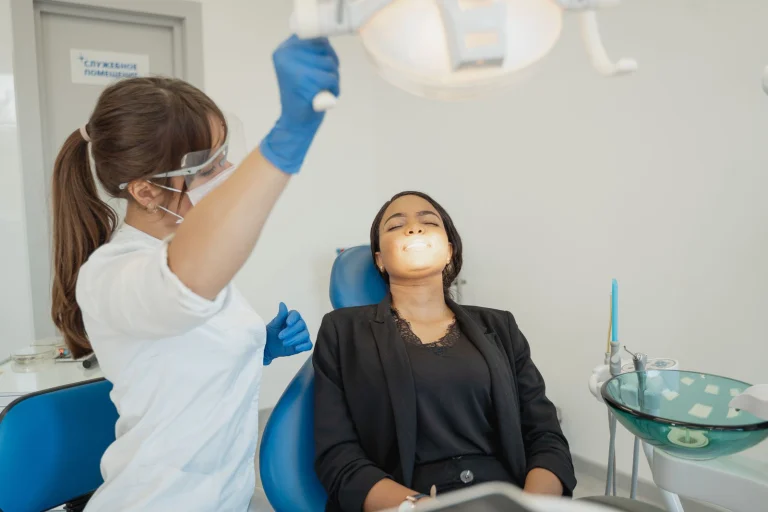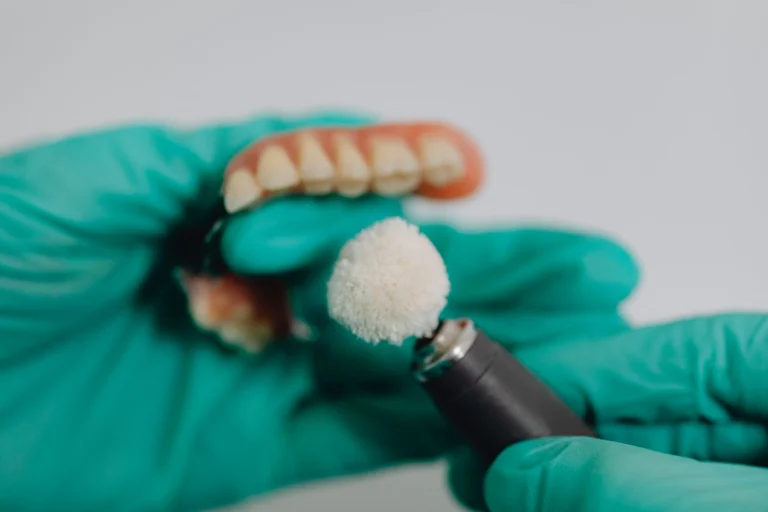
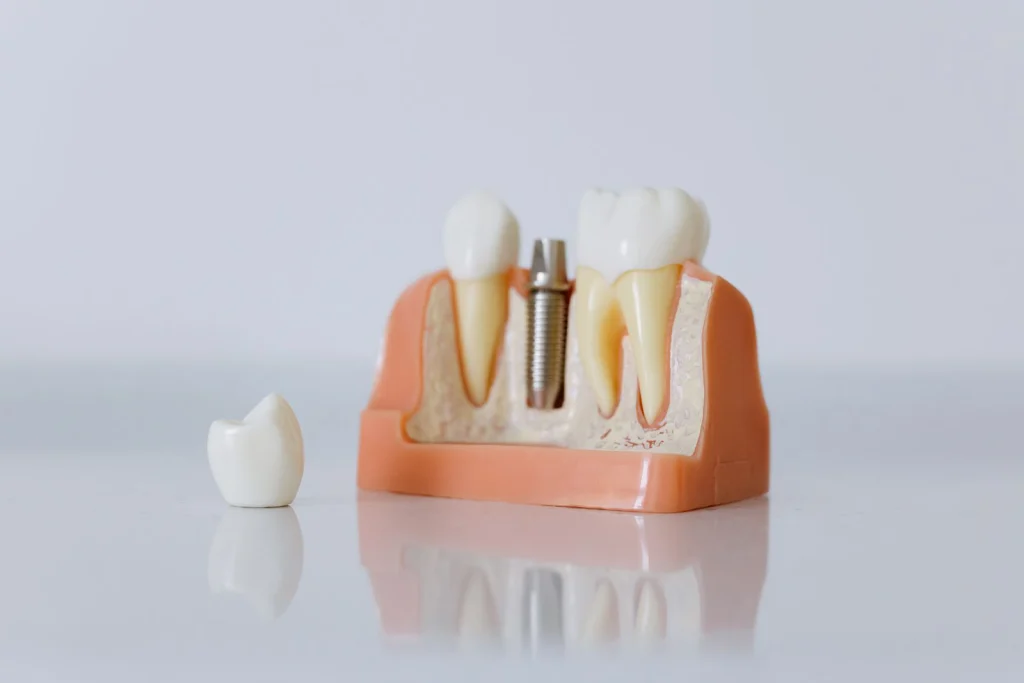
Implant dentures work by attaching a denture to dental implants in the jawbone, instead of relying on the gums alone to hold it. The implants act like artificial tooth roots, and connectors on the denture fit onto them, so the teeth stay anchored while you eat and speak. Depending on the design, the denture either snaps on and off so you can clean it, or is fixed in place and removed only at the dental office.
This guide explains how regular dentures stay in, what changes when implants are added, the difference between snap-on and fixed implant dentures, how many implants are usually needed, and how Dr. Steven W. Haywood, DDS plans implant dentures at the Timonium office.
How do regular dentures work?
A conventional full denture is a set of artificial teeth in a gum-colored base, shaped to rest on the ridges where your teeth used to be. An upper denture covers the palate and stays in mostly through close contact and suction against the gums and the roof of the mouth. A lower denture has much less to hold onto: the tongue and cheeks move it, and there is no palate to create suction. Many people use denture adhesive to help.
Traditional dentures can work well when they are made with care, but they have limits. They can cause sore spots on the gums, especially with harder foods or long wear. A full upper plate is bulky and can change how you sense food temperature and flavor. And because nothing replaces the tooth roots, the jawbone under a denture tends to shrink over time, so a denture that fit well at first can gradually loosen.
How do dental implants work with dentures?
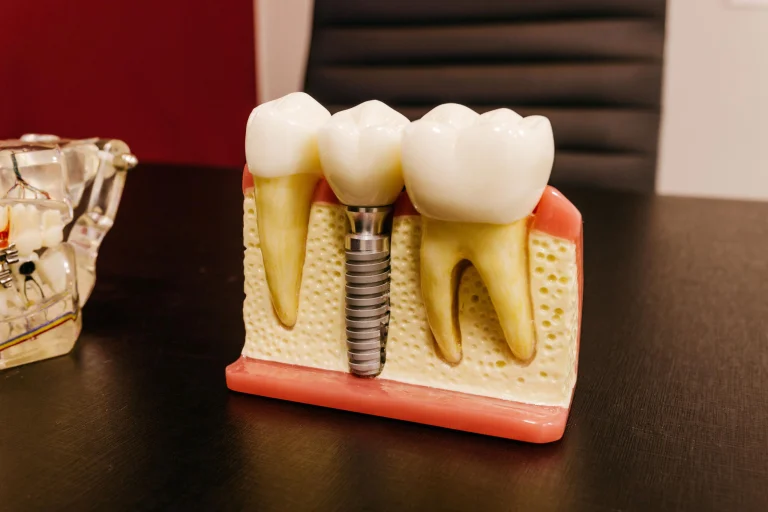
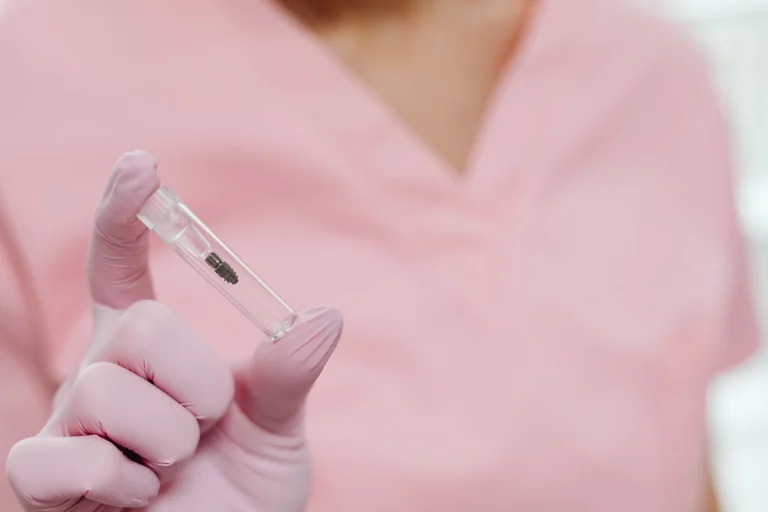
A dental implant is a titanium post placed in the jawbone to act as a new root. In the months after implant placement, bone fuses around it. Once the implants have integrated, they can support a single crown, a bridge or a full denture.
With an implant denture, the denture is made with connectors that attach to the implants. That connection is what makes the difference:
- It stays put. Implant-supported dentures don’t slip or click the way loose dentures can.
- You chew with more strength. Anchoring the teeth to implants can relieve many of the difficulties of conventional dentures, with stronger chewing and more comfort.
- It supports the bone. Implants help prevent the bone deterioration that follows tooth loss.
For a lower denture, the implant-supported denture is the standard of care recognized by the ADA. Upper dentures can be secured to implants too, which greatly improves chewing ability in most cases. There are two main designs: removable dentures that snap onto implants, and fixed teeth that stay in.
Snap-on implant dentures: the removable option
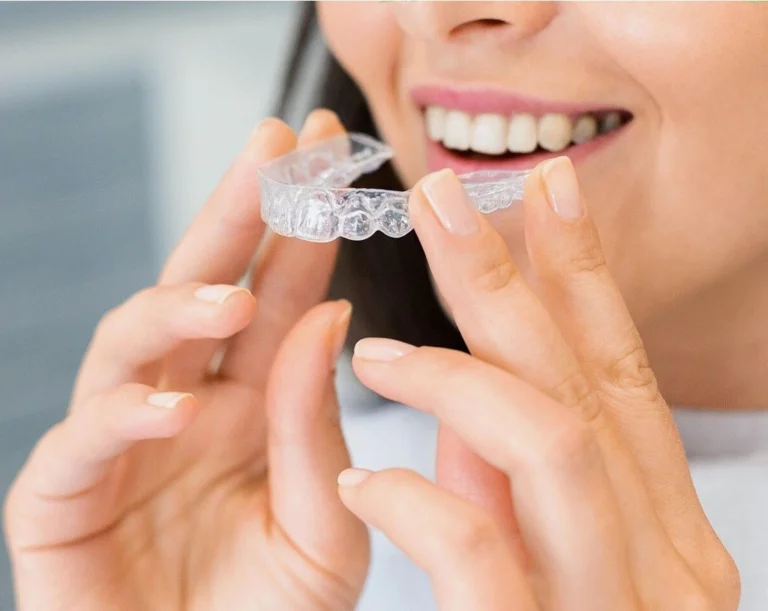
Snap-on implant teeth are a removable set of teeth, full or partial, that clips onto implants. A snap connector joins the denture to each implant, so the teeth stay anchored while you eat and talk but still come out for cleaning. They cost less than fixed, screw-in implant teeth.
How the attachments connect
Each implant carries a small attachment, and the underside of the denture holds a matching part that clicks over it. Upper snap-on dentures at the practice are made with Locator and Equator attachments, two premium brands chosen for long-term success. Another design used in dentistry links the implants with a metal bar that the denture clips onto; which kind of connection suits your mouth is a question for your consultation.
An upper denture that leaves the palate open
An upper snap-on set usually rests on four or five implants. It is shaped like a horseshoe and doesn’t fully cover the palate the way a conventional upper denture does, so it feels less bulky.
A lower denture on as few as two implants
A lower snap-on denture uses a minimum of two implants, spread apart so chewing forces are shared over a larger area and the denture doesn’t rock. Four or more are often preferred, to stop the teeth rocking forward or back and to keep food from collecting underneath while you chew. Many people choose the two-implant option for financial reasons, and in many cases more implants can be added later for extra stability.
Implant-secured partial dentures
Implant work doesn’t mean losing all your teeth. Useful teeth that can support a good result are kept. Implants secure a partial denture better than the clips on a conventional partial, with no clips or wires showing in your smile. Clips also put stress on the teeth they grip, which can eventually cost you that tooth, and an implant connection removes that risk. If you lose another tooth later, a tooth can simply be added to a snap-on partial instead of starting over.
Fixed implant dentures: teeth that stay in
Fixed full-arch implant teeth are a complete set of teeth screwed or cemented onto implants. You may hear them called All-on-4, a fixed hybrid implant denture or “permanent dentures.” They don’t come out at home; only the practice removes them.
- Implants: at least four per arch, and more are often suggested, especially where good bone support is lacking.
- Support: the teeth sit on a custom CNC-milled titanium bar.
- The teeth themselves: high-strength denture teeth as a starting point, or custom ceramic teeth for durability, at additional cost.
- How they feel: they don’t move or wobble while eating, so chewing is the most natural of all the options.
- A spare set: chewing forces are high enough that the teeth can be expected to need service at some point, so a spare set is always made.
With All-on-4, permanent dentures can be placed in as little as one appointment. While the implants integrate with the bone, temporary teeth let you chew comfortably. Whether that approach suits you depends on your scan and your plan.
Snap-on or fixed: how the two compare
- Taking them out: snap-on dentures come out for cleaning; fixed teeth can only be removed by the practice.
- Cost: a full upper snap-on denture costs roughly 30% less than a comparable fixed set, and fixed teeth are the most costly option.
- Number of implants: a snap-on lower set can start with two implants and add more later; a fixed set starts with at least four.
- Chewing: both are far more secure than regular dentures, and fixed teeth feel the most like natural teeth.
- Maintenance: fixed teeth can’t be removed to clean underneath, so removing and cleaning them at the office every 3–4 months is recommended in most cases.
Who is a candidate for implant dentures?
Most of the answer comes from an exam and a 3D scan. The practice uses a low-dose Green CT cone beam scanner to show the quantity and quality of your jawbone, and if bone grafting is needed you’ll know at that same visit. Active gum disease is treated before implants, and smokers can have implants, though they are somewhat less successful. Computer-guided implant surgery helps when several implants need to be almost parallel to one another, as they often are under a denture.
If you already wear dentures, implants can be placed under the dentures you have. Because many dentures are poorly constructed, though, new dentures made with proper construction are often recommended for the best long-term value. Dr. Haywood is specially trained in prosthodontics and makes dentures with the branching technique, learned from Dr. Jack Turbyfill and not taught in dental schools. Read more about dentures in Timonium.
Caring for implant dentures
Implants don’t decay, but the gums around them need extra attention. Gum tissue doesn’t seal around an implant as firmly as it does around a natural tooth, so professional cleanings every 3–4 months are recommended, using titanium or plastic instruments that are safe for implants. For daily oral hygiene, interdental brushes, a water irrigator and an end-tuft or electric toothbrush all help. If you grind or clench, a custom night guard protects implants from damaging sideways forces.
Insurance and financing
The practice is out of network with all dental insurance companies. You pay at the time of your visit, and the office files the claim on your behalf so your plan can reimburse you for what it covers. Health savings and flex plans are welcome. CareCredit offers no-interest options for up to 12 months, and Cherry offers payment plans from 3 to 24 months. Compare financing options.
Frequently asked questions
How many implants does a denture need?
A lower snap-on denture needs at least two, with four or more often preferred. An upper snap-on set usually uses four or five. Fixed full-arch teeth start at four implants per arch, and more are often suggested when bone support is limited.
Can implants be added to the denture I already have?
Yes, implants can be placed under existing dentures. A new, properly constructed denture is often recommended for the best long-term value, and Dr. Haywood can tell you which makes sense after looking at your current set.
Do implant dentures feel like real teeth?
Fixed implant teeth feel the most like natural teeth, because they don’t move while you eat. Snap-on dentures are removable, but they stay anchored during chewing and are more comfortable than a denture resting on the gums.
How long do implant dentures last?
Implants that heal properly over the first 6–12 weeks after placement are considered to have lifetime potential, as long as they are looked after at home and at the office. The denture teeth themselves wear and can need service over time.
What if I’m nervous about implant surgery?
Laughing gas, which lets you drive yourself home, and oral conscious sedation, which needs a ride, are both available. Read about sedation dentistry.
Find out if implant dentures are right for you
Dr. Steven W. Haywood, DDS has over three decades of experience in restorative and implant dentistry and is a Fellow of the International Congress of Oral Implantologists. Every phase, from the CT scan to the finished teeth, happens in one office. To talk about a denture that slips, or to learn about all your dental implant options in Timonium, request an appointment or call (410) 453-9399. The office is at 108 W Timonium Rd, Ste 200, Timonium, MD 21093.
Ready to see your future smile?
Tired of a denture that slips? Book an implant denture consultation in Timonium.