
A missing tooth says far less about you than you might fear, and a little more than you might like. People do notice a gap in a smile, especially a missing front tooth, and first impressions form quickly. But a gap says nothing true about your character, your income or how well you look after yourself. Teeth are lost to sports injuries, falls, failed root canals, gum disease and decay, often through no fault of the person involved.
What a missing tooth really says is that something in your mouth has changed, and that it will probably keep changing if it is left alone. This article looks honestly at how a gap in your smile is seen by others, what it does to the teeth and bone around it, and the ways Dr. Steven W. Haywood, DDS replaces missing teeth at the Timonium office, from a single implant to an implant bridge.
Is a missing tooth unattractive?
Most people would say a visible gap draws the eye. A smile is one of the first things others see when they meet you, and a missing front tooth stands out against an otherwise even row of teeth. Whether it is a guy with a missing tooth sitting in a job interview or a grandmother who has stopped smiling in family photos, the gap tends to become the detail people remember.
Attractiveness is personal, and plenty of people wear a gap with confidence. The bigger issue is usually how the person with the missing tooth feels. Many people start hiding their smile, covering their mouth when they laugh, avoiding the camera or holding back in meetings and other professional settings. Over time, that quiet self-consciousness can shape daily life more than the gap itself.
A missing front tooth versus a missing back tooth
A missing back tooth may be invisible in conversation, but that does not make it harmless. A missing front tooth is harder to hide and is often what finally brings people in. Both deserve attention for different reasons: one mostly affects how your smile looks, the other mostly affects how you chew, and both affect the teeth around them.
What a missing tooth does to the rest of your mouth
You need all of your teeth to chew and speak properly and to keep the rest in alignment. When one is lost, a chain of changes can follow:
- The remaining teeth shift. Neighboring teeth can drift or tip into the space, and the tooth that used to meet the missing one has nothing to bite against.
- The bite changes. A misaligned bite can lead to problems such as TMJ disorder.
- The face can change. Cheeks or lips can sink in where teeth are missing, which alters your overall appearance.
- Gum disease becomes more likely. Untreated gaps significantly increase the risk of gum disease.
- The bone shrinks. Without a tooth root, the jawbone in that area can deteriorate. The upper front jawbone can deteriorate rapidly if a tooth is removed and the socket is not preserved with grafting.
None of this happens overnight, and not every gap causes every problem. But a missing tooth is rarely a stable situation, and replacing it sooner usually keeps more options open.
Why front teeth are lost
If you have lost a front tooth, you are far from alone, and the cause is often something you could not have controlled. Common causes include:
- Trauma, such as a sports injury, a fall or a childhood accident
- A tooth that never came in
- A failed root canal, or a tooth fractured by a failed post
- Severe periodontal (gum) disease
- Extensive root decay from dry mouth or a high-carbohydrate diet
Your options for replacing a missing tooth
There are three established ways to replace a missing tooth. Each has its place, and the right one depends on your mouth, your health and your budget.
A removable partial denture
A partial denture is the least expensive option. It comes in and out, usually has metal clasps that grip nearby teeth, and can affect how you taste food. For some people it is a sensible short-term answer, but many find it hard to forget it is there.
A traditional dental bridge
A traditional bridge uses crowns on the teeth on either side of the gap to hold an artificial tooth between them. It is fixed in place, but the neighboring teeth have to be prepared to carry it, and cleaning under it takes floss threaders. Bridges are used less often than they once were, because dental implants are the better alternative in most cases. Read more about dental bridges.
A single tooth implant
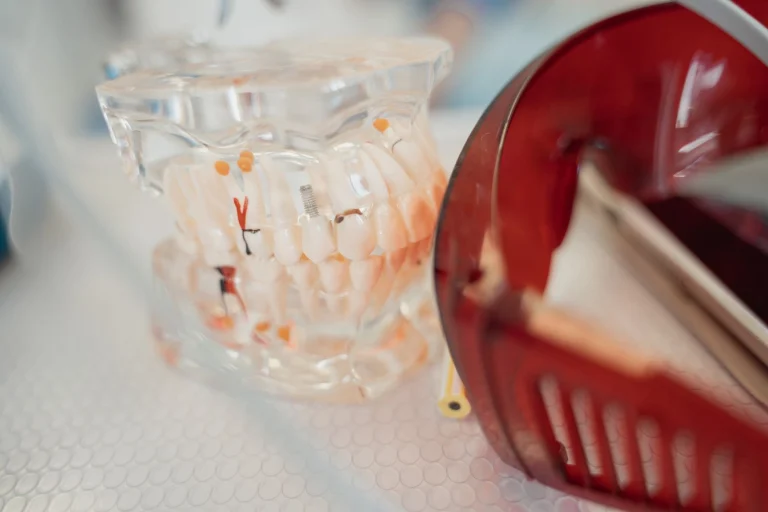
A single tooth implant replaces the whole tooth, root and crown, without relying on the natural teeth beside it. It has three parts: the implant that takes the place of the root, the abutment that supports the new tooth, and the crown you see. Because it replaces the root, an implant helps prevent the bone loss that follows tooth loss. In this office, a single implant is regularly less expensive and more conservative than a bridge.
Replacing a missing front tooth with an implant
At the practice, implants make up 98% of what patients want and receive to replace missing front teeth. Front implants take more care than back ones: the bone is often thinner and less dense, and the result shows every time you smile. That is why smaller implants, custom ceramic abutment posts and computer-guided implant surgery are virtually always used for front teeth. When a tooth has been missing a long time, or never developed, orthodontics and bone grafting are considered as part of the plan. Learn more about front tooth implants.
A common worry is going without a tooth while an implant heals. When a failing tooth is being removed, the implant can often be placed at the same visit, and a temporary tooth can sometimes be made during healing.
When more than one tooth is missing
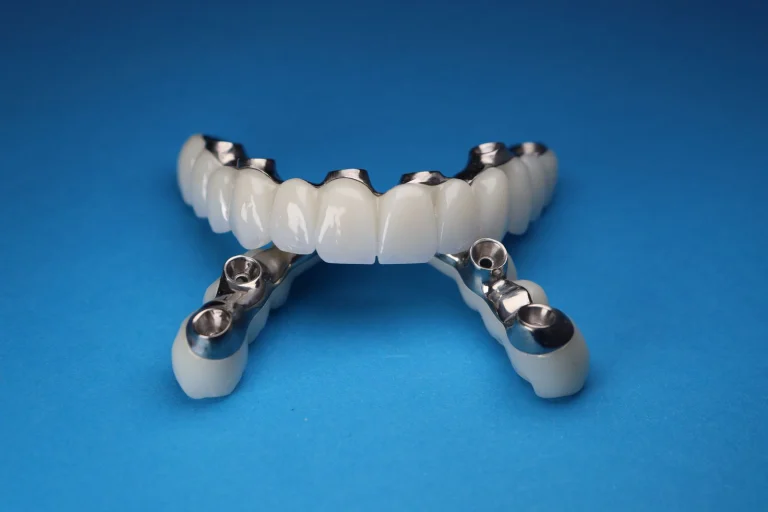
If several teeth are missing in a row, you may not need an implant for each one. An implant bridge uses two or more implants to hold three or more joined teeth, and it can cost 20–30% less than placing an implant for every missing tooth. It works well where 3 or 4 front teeth have been lost to trauma, decay or gum disease, or where most of the back teeth are gone. For people missing most or all of their teeth, snap-on and fixed full-arch implant teeth are also available. Compare every option on the dental implants in Timonium page.
If your teeth are there but you don’t like your smile
Not every self-conscious smile involves a missing tooth. If the problem is a chipped, stained or uneven tooth, or a small space between teeth, a less involved cosmetic treatment may be enough:
- Dental bonding uses tooth-colored composite resin to repair chips and discoloration, close gaps between teeth and change their shape, and can be completed in a single visit.
- Porcelain veneers are thin, translucent shells bonded to the front of the teeth to improve gaps, chips, stains and crooked teeth.
- In-office teeth whitening uses laser power whitening, designed to brighten your smile in less time than at-home kits.
Cosmetic imaging is part of every cosmetic evaluation, so you can see potential results before you commit. Read about porcelain veneers.
Paying for tooth replacement
The practice is out of network with all dental insurance companies. You pay at the time of your visit, and the office files the claim on your behalf so your plan can reimburse you for whatever it covers. Health savings and flex plans are welcome. Financing is available through CareCredit, with no-interest options for up to 12 months, and Cherry, with payment plans from 3 to 24 months. See financing options.
Frequently asked questions
Is it bad to leave a missing tooth unreplaced?
It is not usually an emergency, but it is rarely harmless. The remaining teeth can shift, the bite can become misaligned, the bone can deteriorate and the risk of gum disease rises. Replacing a tooth sooner tends to keep more options open.
Can a front tooth that has been missing for years still be replaced with an implant?
It is worth finding out. When a front tooth has been missing a long time, bone grafting and orthodontics are considered as part of the plan, and a 3D cone beam CT scan shows what your bone can support.
How long does it take to replace a missing tooth with an implant?
An implant needs at least 6–8 weeks of healing after surgery before the tooth is restored, and the whole process from first visit to finished tooth can take several months.
Does getting an implant hurt?
Pain after an implant procedure is described as negligible. If dental treatment makes you anxious, laughing gas and oral conscious sedation are both available. Read about sedation dentistry.
How long do dental implants last?
Current thinking is that implants may last a lifetime. They don’t decay and seem far less affected by gum disease than natural teeth, as long as they are cleaned and checked regularly.
Talk to Dr. Haywood about your missing tooth
Dr. Steven W. Haywood, DDS has practiced cosmetic, restorative and implant dentistry for over three decades, graduated with distinction from the University of Detroit dental school in 1987, and is a Fellow of the International Congress of Oral Implantologists. If a missing tooth has been holding back your smile, request an appointment or call (410) 453-9399. The office is at 108 W Timonium Rd, Ste 200, Timonium, MD 21093, and welcomes patients from Timonium, Towson, Hunt Valley, Baltimore and Shrewsbury, PA.
Ready to see your future smile?
Missing a tooth? Book a consultation in Timonium to see your replacement options.