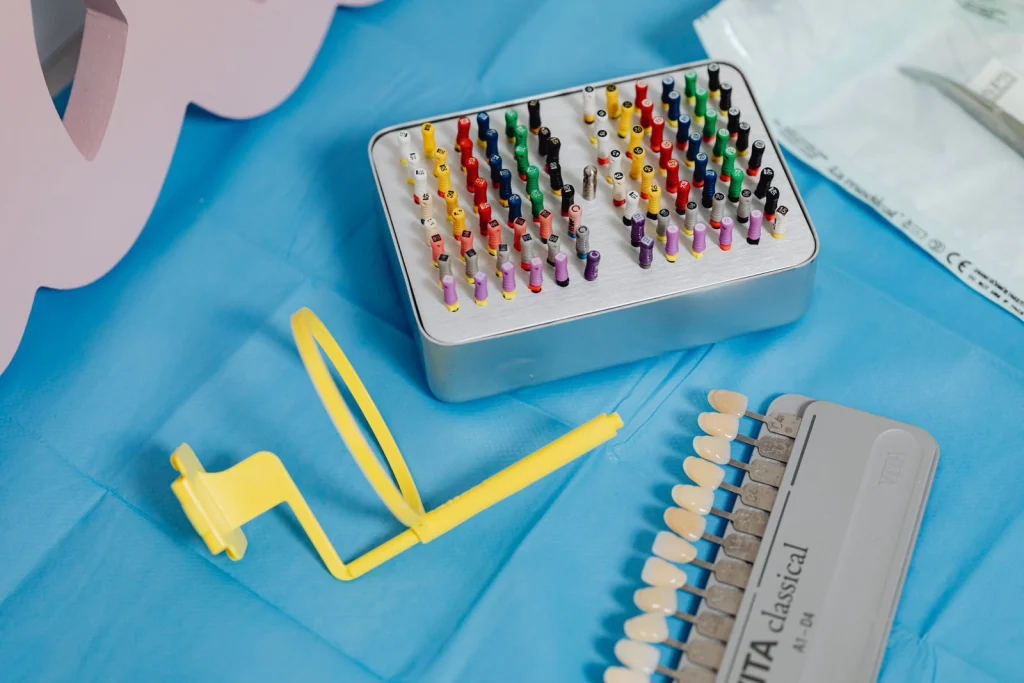
When a tooth is infected or badly damaged, there are two main paths. A root canal saves the tooth: the infection is removed from inside it and the tooth is protected with a crown. A dental implant replaces the tooth: it is extracted, and an implant and crown take its place. If the tooth can be saved with a good long-term outlook, a root canal is usually the more conservative first choice. If it can’t, because it is cracked through the root, has too little sound structure left, or has already failed treatment, an implant is often the better investment.
The right answer depends on your tooth, your bone and your gums, so it is decided at an exam, not online. This guide compares the two side by side and explains how Dr. Steven W. Haywood, DDS helps patients choose at the Timonium, MD office, where both treatments are provided.
Dental implants and root canal procedures compared
- What happens to your tooth: a root canal keeps your natural tooth and its remaining structure; an implant replaces the tooth after it is removed.
- What finishes the treatment: each root canal at the practice is finished with a porcelain crown; an implant is finished with an abutment and a porcelain crown.
- Number of visits: a root canal often takes two or more appointments, depending on the infection; an implant can often be placed at the time of the extraction, then restored after healing.
- Healing time: discomfort after a root canal is normal for several days; an implant needs at least 6–8 weeks of healing before the tooth is restored, and the whole process can take several months.
- Future risks: a treated tooth can still decay or crack; an implant can’t decay, but the gum and bone around it need careful maintenance.
What a root canal involves
Each tooth has a pulp chamber filled with connective tissue, and root canals are the tiny passages in the roots that lead up to it. Nerves run through these canals. When infection reaches the pulp, it can cause serious pain, and root canal therapy is the procedure used to save a tooth with that level of infection.
The tooth is numbed and may be isolated with a rubber dam, and the infection is removed from inside. Depending on how severe it is, treatment can take two or more appointments, with a temporary filling or crown between visits. Afterward the tooth is fragile, so it is capped with a porcelain crown that protects it from breaking and helps keep it from being re-infected. Until the crown is placed, avoid sticky and hard foods and don’t chew on that side. Read about root canals in Timonium.
What a dental implant involves
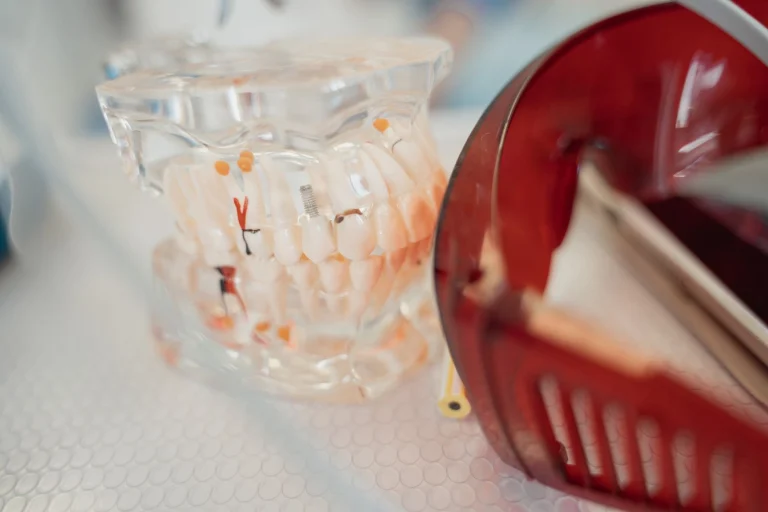
The tooth is gently separated from the ligament that holds it and removed, and the implant can often be placed immediately, at the time of the extraction. A cone beam CT scan shows the quality and quantity of your bone beforehand, and if grafting is needed you’ll know at that same visit. Pain after an implant procedure is described as negligible.
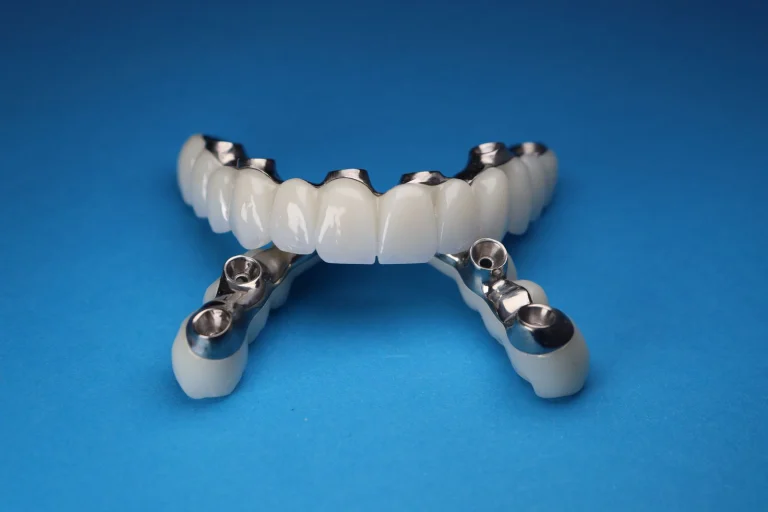
Once the implant has integrated with the bone, the abutment and crown complete your new tooth. A back tooth is often left without a temporary while it heals; front teeth usually get a temporary so you aren’t without a tooth where it shows. See single tooth implants.
When saving the tooth usually makes sense
The practice’s goal is to preserve natural teeth, and all options are discussed before an extraction is recommended. A root canal is often the right choice when:
- The infection is in the pulp, and the tooth has enough healthy structure left to hold a crown.
- The roots are intact, with no crack running through them.
- The gums and bone around the tooth are healthy enough to support it.
- You have a severe, lingering toothache; root canal treatment removes the cause of the pain and relieves infection symptoms.
When replacing the tooth may be the better choice
Some teeth can’t be saved, or can’t be saved in a way that lasts. An extraction and implant may be the better path when:
- The tooth is split along its root. Many cracked teeth can be saved, but one split along the root cannot.
- A root canal has already failed. Failed root canals are one of the common causes of front tooth loss.
- A post has fractured the tooth. Teeth fractured by failed posts are another.
- There is too little tooth left. Extensive decay, including root decay from dry mouth or a high-carb diet, can leave nothing sound to crown.
- The supporting gum and bone are badly damaged. Severe periodontal disease can loosen a tooth beyond saving.
When a front tooth is removed, the socket is preserved with grafting, because the upper front jawbone can deteriorate rapidly otherwise. For front teeth, read front tooth implants.
Thinking about cost and time
Comparing prices online can mislead, because each option has parts that are easy to forget. A root canal needs a crown to protect the tooth, and an implant plan may include an extraction, grafting and a crown. Your own fees depend on your case and are set after an exam. If you are weighing an implant against a bridge rather than a root canal, a single implant is regularly less expensive and more conservative than a traditional bridge in this office. For what drives an implant fee, read how much dental implants cost in Timonium.
Don’t wait on an infected tooth
Whichever path you choose, choose soon. An untreated infection can spread to other teeth or to the bloodstream, and bacteria from a dental abscess can spread through the jaw and cause swelling that can become life threatening. Abscesses don’t always hurt, which is one reason X-rays matter. If you are in serious tooth pain, call as early in the day as you can. New patients with emergency needs are seen on weekdays during normal business hours, based on availability.
How Dr. Haywood helps you decide
Because root canals, extractions and implants are all provided in the same Timonium office, the recommendation is not steered by which treatment is available. Dr. Haywood examines the tooth, reviews digital X-rays and, where an implant is being considered, a 3D cone beam CT scan, then explains what each option would involve for you. If another office has already given you an implant plan, second opinions are always complimentary.
If you are nervous about either procedure, laughing gas is offered as a complimentary service, and oral conscious sedation is available if you arrange a ride. See sedation dentistry.
Paying for treatment
The practice is out of network with all dental insurance companies. You pay at the time of your visit, and the office files the claim on your behalf so your plan can reimburse you for what it covers. Health savings and flex plans are welcome, and financing is available through CareCredit, with no-interest options for up to 12 months, and Cherry, with plans from 3 to 24 months.
Frequently asked questions
Is a root canal or an implant more painful?
Pain after an implant procedure is described as negligible. After a root canal, some discomfort for several days is normal, especially when chewing, and warm salt water rinses and recommended pain medication help.
Can a tooth with a root canal fail later?
It can. A treated tooth is fragile, which is why it is capped with a porcelain crown to protect it from breaking and help keep it from being re-infected. Failed root canals are one cause of tooth loss.
Can I get an implant the same day my tooth is pulled?
Often, yes. When a tooth is being removed, the implant can frequently be placed at the time of the extraction. Your scan shows whether that suits your case.
Which lasts longer, a root canal or an implant?
Both can serve for many years with good care. Current thinking is that implants may last a lifetime, since they don’t decay and seem far less affected by gum disease than natural teeth, while a root canal keeps your own tooth.
Get an honest opinion on your tooth
If you have been told you need a root canal or an implant, a visit will show which makes more sense for you. Learn more about dental implants in Timonium, request an appointment or call (410) 453-9399. The office is at 108 W Timonium Rd, Ste 200, Timonium, MD 21093.
Ready to see your future smile?
Told you need a root canal or an implant? Get an honest opinion in Timonium.