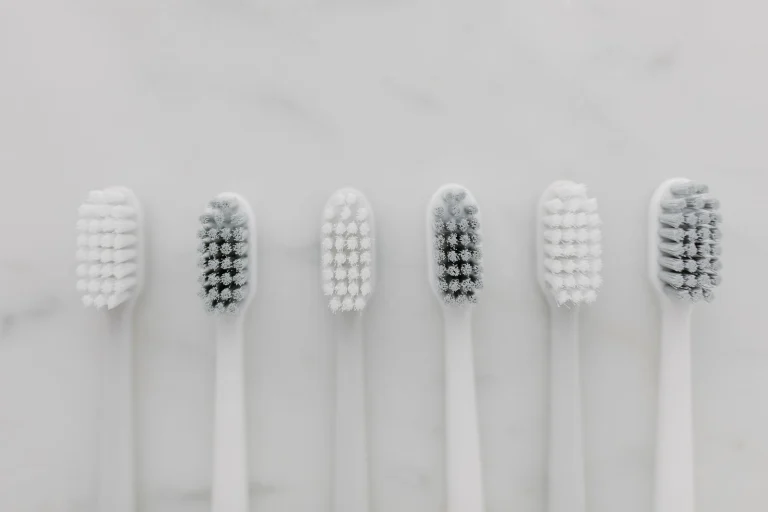
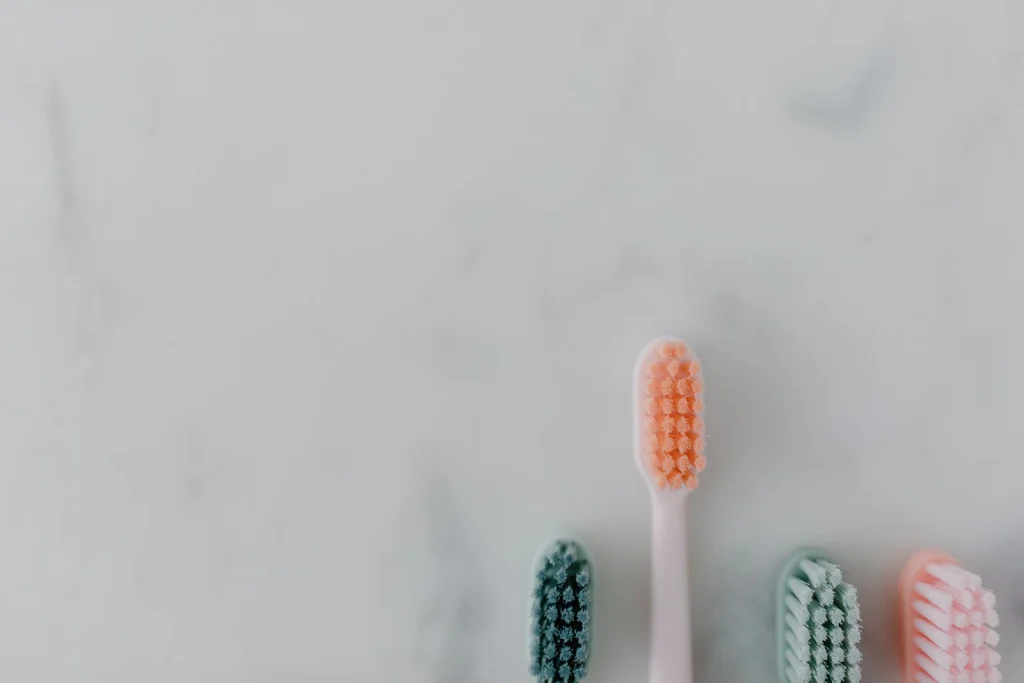
Aggressive brushing, scrubbing hard and fast or using stiff bristles, doesn’t get teeth cleaner. It can wear away enamel near the gumline, push gums back from the teeth, leave teeth sensitive to hot and cold, and damage existing dental work, while still missing plaque in the spots that matter most. Smart brushing is gentler and slower: a soft-bristled toothbrush, light pressure, small strokes aimed at the gumline, and about two minutes, twice a day.
Here is how to tell if you are brushing too hard, what aggressive tooth brushing does to your gums and enamel, the technique that works better, and when the damage is worth having checked at the Timonium office of Dr. Steven W. Haywood, DDS.
Why harder brushing doesn’t mean cleaner teeth
When you scrub a tile floor, more pressure helps. Teeth are different. Plaque is soft and sticky, so it comes off with gentle, thorough strokes and doesn’t need force. Enamel is hard, but it can still wear down over time, and gum tissue is delicate. Pressing harder mostly flattens the bristles, so they sweep past the gumline and the spaces between teeth instead of cleaning there.
Speed is the other problem. Brushing quickly usually means brushing briefly, and a rushed brush tends to skip the same areas every time: the backs of teeth, the gumline and the molars at the back of the mouth.
Signs you are brushing too hard
- Toothbrush bristles that splay out or flatten quickly
- Teeth that are sensitive to hot, cold or sweet foods
- Gums that seem to be pulling back, making teeth look longer
- Small notches or worn areas near the gumline
- Gums that feel sore or bleed after brushing
Some of these signs overlap with gum disease, so it is worth having them checked rather than assuming the cause is only your brushing habits. See the warning signs of gum disease.
What aggressive brushing can do
Receding gums
Repeated hard scrubbing can wear gum tissue back from the teeth over time. As gums recede, the root surfaces of the teeth can become exposed. Roots don’t have the protective enamel covering that the crown of the tooth has, so exposed roots are more vulnerable to sensitivity and decay.
Worn enamel and sensitivity
Brushing with too much force, particularly with hard bristles, can gradually abrade enamel near the gumline. Worn enamel and exposed roots are common reasons teeth become sensitive to hot and cold.
Plaque left behind
Fast, hard brushing tends to miss plaque along the gumline and in the grooves of back teeth. Plaque left in place can harden into tartar, feed decay and inflame the gums, so the person brushing hardest may still be building up tartar.
Damage to dental work
Crowns, veneers, bonding and fillings all do better when they are cleaned gently and thoroughly. The practice’s own aftercare instructions for veneers note that without proper care, gums may recede and reveal the underlying discolored tooth structure, which can mean replacing the veneers. Learn about dental veneers.
Grinding adds to the wear
Brushing isn’t the only thing that wears teeth. Grinding and clenching place excessive force on teeth, wearing enamel away and introducing small cracks. If you grind, comfortable, clear bite guards custom-made for you help protect your teeth. See TMJ and grinding.
The smart brushing technique
- Choose a soft-bristled toothbrush. Soft bristles flex to reach along and just under the gumline without scraping. Manual and electric brushes both work when used gently. Replace your brush when the bristles start to splay.
- Hold it lightly. Try holding the brush with your fingertips, like a pen, rather than gripping it in your fist. It is much harder to press too hard that way.
- Angle toward the gums. Tilt the bristles at about a 45-degree angle toward the gumline, so they clean where the tooth and gum meet.
- Use small, gentle strokes. Short back-and-forth or circular strokes, a tooth or two at a time, work better than long scrubbing sweeps.
- Follow a pattern. Work around your mouth in the same order every time, covering the outside, inside and chewing surfaces, so nothing gets skipped.
- Take about two minutes, twice a day. A slow, deliberate two minutes in the morning and before bed does more than a hard, hurried minute.
- Clean between your teeth. Brushing can’t reach between teeth. Floss, floss picks or a water flosser finish the job; compare them in floss picks vs. regular floss and why a water flosser might be a good idea.
What about toothpaste?
Toothpaste doesn’t need to be scrubbed in to work. If your teeth are sensitive, ask about your toothpaste at your next visit. The practice avoids fluoride and offers calcium rebuilding treatments instead to help strengthen enamel for patients of all ages.
Brushing around implants and bridges
Dental implants are brushed and flossed much like natural teeth, but with extra attention. Recommended tools include interdental brushes, end-tuft brushes and careful use of an electric or manual toothbrush. Bridges need special floss threaders or other aids to reach and clean all areas properly.
How the practice can help
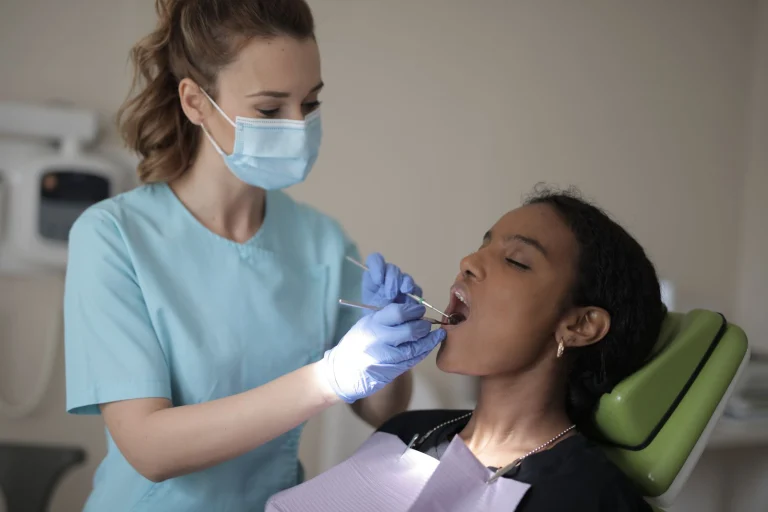
A professional cleaning is a good time to ask whether your brushing technique is doing its job. The practice recommends a cleaning every six months, and appointments here last a full 60 minutes, which leaves time to remove the plaque and tartar you have missed, check the health of your gums and talk through your home care. Digital X-rays and DIAGNOdent laser detection help find decay at its earliest stages, sometimes before it shows on an X-ray. Learn about dental cleanings and preventive care, or read do I need a cleaning if I brush and floss?
If your gums have already receded or bleed easily, the problem may be more than brushing. Bleeding or receding gums, bad breath and deep pockets in the gums can mean infection, and 98 percent of the practice’s periodontal therapy is non-surgical. See gum disease treatment and bleeding gums after a cleaning.
Paying for your visit
The practice is out of network with all dental insurance providers. You pay at the time of your visit, and the office files the claim on your behalf so your plan can reimburse you for whatever it covers. Health savings and flex plans are welcome, and financing is available through CareCredit, with no-interest options for up to 12 months, and Cherry, with plans from 3 to 24 months. See financing options.
Frequently asked questions
Can brushing too hard cause receding gums?
It can contribute. Repeated aggressive brushing, especially with hard bristles, can wear gum tissue back over time. Gum disease is another common cause of receding gums, so have them checked.
Is an electric toothbrush better if I brush too hard?
Either type can clean well when used gently. The key is light pressure and soft bristles: guide the brush along the gumline and let it do the work rather than pressing.
How long should I brush my teeth?
About two minutes, twice a day, with slow, deliberate strokes, plus cleaning between your teeth every day.
Why are my teeth sensitive after I brush?
Worn enamel and roots exposed by receding gums are common reasons, but decay, a cracked tooth or gum disease can cause sensitivity too. An exam shows what is behind it.
Get your brushing and gums checked in Timonium
If your teeth have become sensitive or your gums seem to be receding, have it looked at before the wear goes further. Request an appointment or call (410) 453-9399. The office of Dr. Steven W. Haywood, DDS is at 108 W Timonium Rd, Ste 200, Timonium, MD 21093, and patients come from Timonium, Towson, Hunt Valley, Baltimore and Shrewsbury, PA. New patients are always welcome. Learn more about general dentistry in Timonium.
Ready to see your future smile?
Sensitive teeth or receding gums? Book a cleaning in Timonium and ask about your brushing technique.