If you wear braces or Invisalign, or plan to start soon, it is worth thinking twice before getting a tongue, lip or cheek piercing. Oral jewelry can chip teeth, rub against the gums, knock against brackets and wires or damage aligners, and the swelling that often follows a new piercing can make orthodontic treatment uncomfortable. The safest approach is to talk with your dentist before you pierce. If you already have a piercing, mention it at your orthodontic consultation so your treatment can be planned around it.
This guide from Dr. Steven W. Haywood, DDS in Timonium focuses on how oral piercings and orthodontic treatment affect each other. For the broader risks of piercings and tooth gems, read oral piercings and tooth gems: know the risks.
Why piercings and orthodontics are a tricky mix
Orthodontic treatment works by applying steady, controlled pressure to move teeth gradually into a better position. Anything that adds uncontrolled pressure, damages the appliance, or makes the mouth sore can work against that plan. Oral jewelry can do all three.
At the same time, teeth and gums that are being straightened need to stay healthy. Straight, uniform teeth are easier to clean once treatment is done, but during treatment the mouth needs extra care, and a piercing adds one more place for bacteria to collect.
Tongue piercings with braces
Brackets and wires
A barbell in the tongue can click against brackets and wires when you talk or eat. Over time, that contact can loosen a bracket, bend a wire or chip the metal jewelry itself. A loose bracket or bent wire means the teeth may not move as planned until it is repaired.
Chipped and cracked teeth
Metal jewelry hitting teeth is one of the most common ways piercings damage enamel. Once enamel chips or cracks, it can only be restored with dental materials, and a chipped tooth during orthodontic treatment can complicate the plan.
Pushing jewelry against your teeth
Many people with tongue piercings develop a habit of pushing or clicking the jewelry against the back of their front teeth. Because orthodontics is all about controlled pressure, a constant habit like this is worth mentioning to the dentist before and during treatment.
Lip and cheek piercings with braces
Lip rings and studs sit right against the gums and teeth. With braces, they have more to catch on: jewelry can snag on brackets, and the lip is pressed between the jewelry and the appliance. Brackets cemented to the teeth can already irritate your cheeks and lips, and jewelry can add to that soreness.
The bigger long-term concern is the gums. Jewelry that rubs on the same spot of gum tissue can contribute to gum recession, exposing more of the tooth root and making the area sensitive. Gums that are being asked to support moving teeth need to be as healthy as possible.
Oral piercings with Invisalign
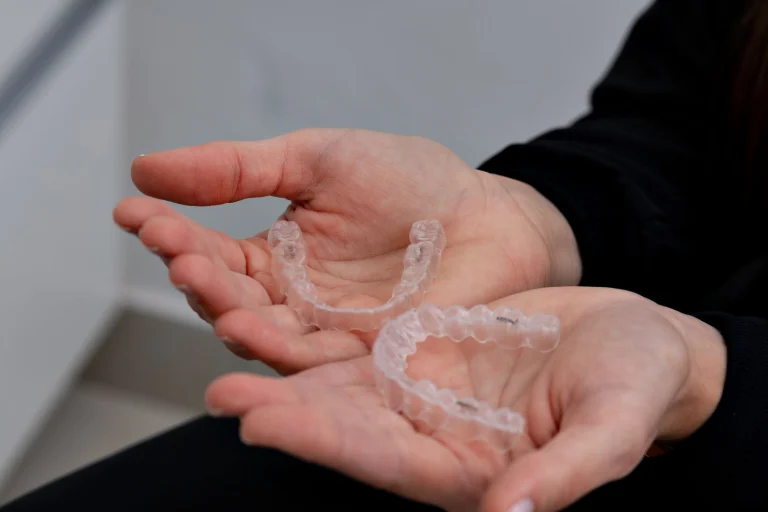
Clear aligners avoid brackets and wires, so some of the problems above are smaller with Invisalign. Piercings still matter:
- Aligners have to be worn. Invisalign aligners work when they are worn at least 22 hours a day. A sore, swollen tongue or lip from a new piercing can make it tempting to leave them out, which slows progress.
- Jewelry can damage aligners. Biting on or clicking jewelry against aligners can scratch, crack or distort them.
- Getting aligners in and out. You take aligners out to eat, drink, brush and floss. Lip or tongue jewelry can get in the way and make that routine awkward.
- Cleanliness. Aligners fit closely over the teeth, so keeping both your teeth and your jewelry clean helps avoid trapping bacteria against the enamel and gums.
For how aligners fit into daily life, see Invisalign in real life.
Teens, piercings and orthodontic treatment
Piercing questions often come up in the same years as orthodontic treatment. The best time to consider orthodontics is once the permanent teeth have grown in, and many teens choose Invisalign Teen because the clear aligners won’t draw attention to their smile. If a teen is thinking about an oral piercing, it is a good conversation to have at a dental visit before anything is done, so the family understands how it could affect treatment.
Should you wait until treatment is finished?
If you are planning orthodontic treatment and also want an oral piercing, it makes sense to talk it over with the dentist first. Waiting until your teeth are straightened avoids adding a new wound, swelling and jewelry to a mouth that is already adjusting to braces or aligners. If you choose not to wait, knowing the risks helps you protect your teeth and your treatment.
If you already have an oral piercing
- Tell the dentist. Mention it at your consultation and at check-ins so your teeth, gums and appliance can be watched closely.
- Don’t play with the jewelry. Clicking it against teeth, brackets or aligners is where much of the damage comes from.
- Ask about removing it for sports. A blow to the mouth with jewelry in place can injure the teeth and soft tissue. See sports mouthguards for kids.
- Keep everything clean. Brush and floss carefully, clean your aligners as directed, and keep the jewelry clean.
- Watch for warning signs. Call if you notice swelling that gets worse, pain, a chipped tooth, a loose bracket, a damaged aligner or gums pulling back from a tooth. Signs of infection deserve prompt attention; read oral infection: signs, causes and when to call.
Repairing damage from a piercing
If jewelry has already chipped or worn a tooth, there are ways to restore it, often once orthodontic treatment is complete. Small chips can be repaired with dental bonding, tooth-colored composite resin sculpted directly on the tooth, usually in a single visit. Larger damage may call for a porcelain veneer or, for a tooth with extensive damage, a dental crown. The right repair depends on how much tooth is affected and where it sits in your treatment plan.
Paying for orthodontic and restorative care
The practice is out of network with all dental insurance providers: you pay at the time of your visit, and the office files the claim so your plan can reimburse you for whatever it covers. HSA and flex plans are welcome. Invisalign can be paid in monthly payments in the office after a down payment, and financing is available through CareCredit, with no-interest options up to 12 months, and Cherry, with plans from 3 to 24 months. See financing options.
Frequently asked questions
Can I get my tongue pierced while wearing braces?
It is best to talk with your dentist first. Tongue jewelry can damage brackets, wires and teeth, and swelling from a new piercing can make treatment uncomfortable.
Is a tongue piercing a problem with Invisalign?
It can be. Jewelry can scratch or crack aligners, and a sore tongue can make it harder to wear aligners the 22 hours a day they need.
Can a lip piercing affect my gums during orthodontic treatment?
Yes. Jewelry that rubs against the gums can contribute to gum recession, and healthy gums matter while teeth are moving.
My piercing chipped a tooth during treatment. What now?
Call the office. The tooth can be checked, and depending on the damage, repaired with bonding, a veneer or a crown at the right point in your treatment.
Protect your smile and your treatment
Thinking about a piercing, or already wearing one with braces or aligners? Talk it through with the team before it becomes a problem. Request an appointment or call (410) 453-9399. Dr. Haywood’s office is at 108 W Timonium Rd, Ste 200, Timonium, MD 21093. See all orthodontic options, or read orthodontic options for adults.
Ready to see your future smile?
Book a visit in Timonium to talk through piercings and your orthodontic treatment.