Guided implant surgery in Timonium
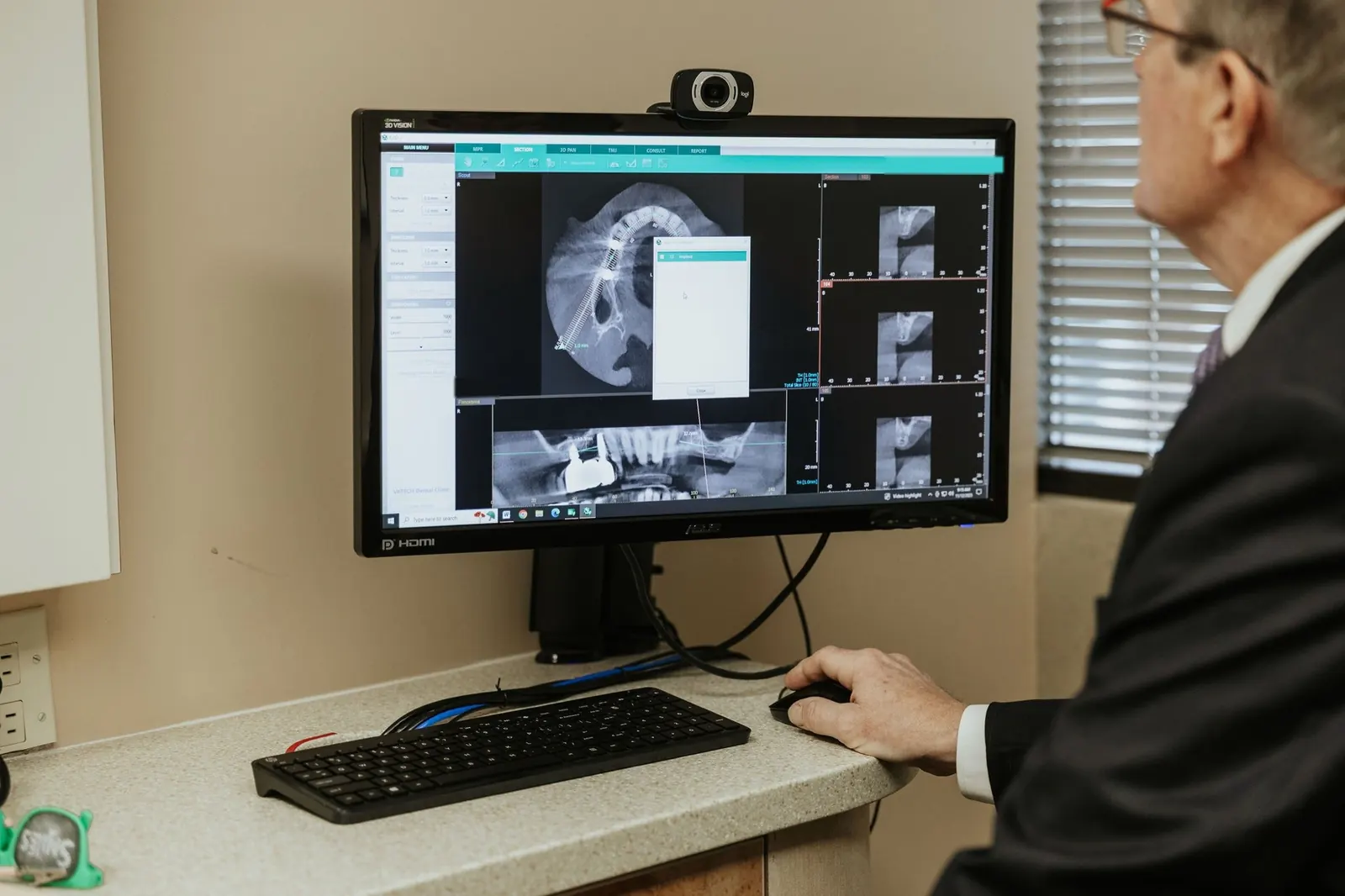
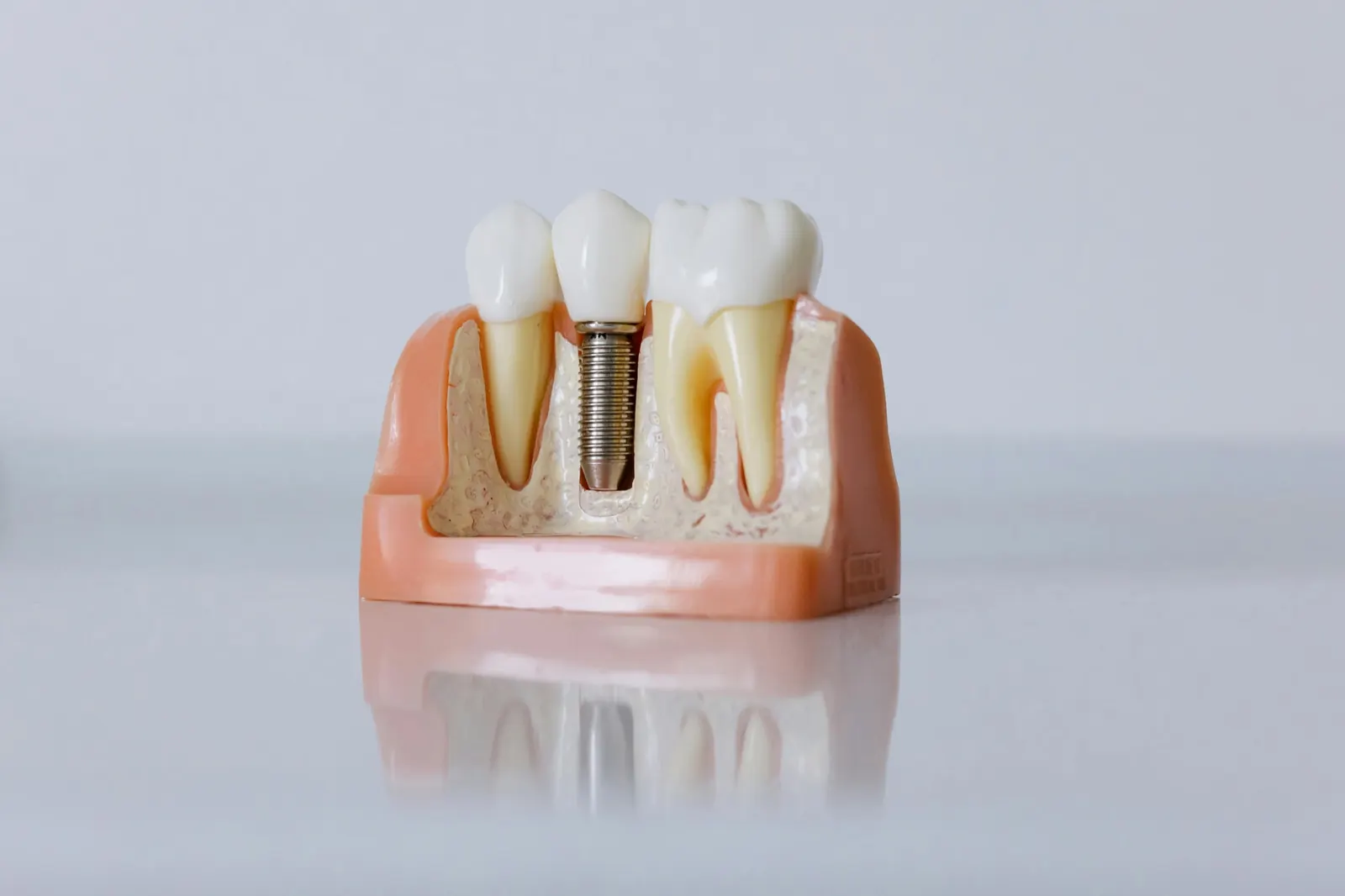
Where an implant sits matters for how it serves you. Plan it in 3D, then place it exactly—a low-dose Green CT scan maps your bone, the implant is placed virtually first, and a 3D-printed guide carries the plan.
weeks
Timonium, MD

Computer-guided implants in Timonium
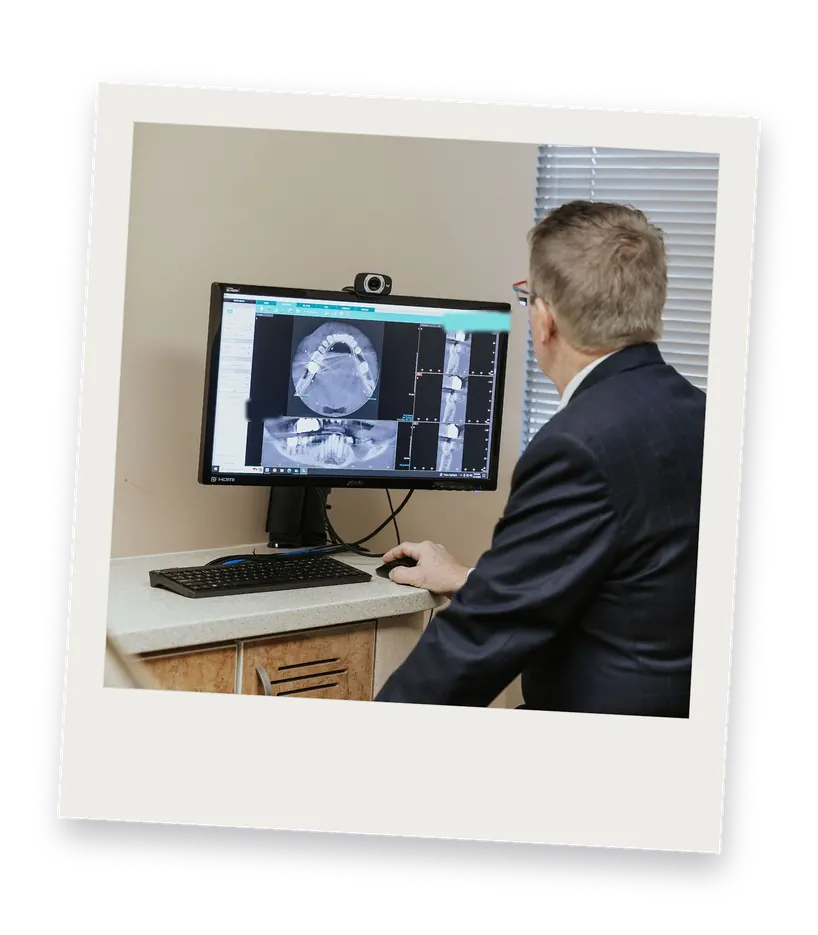
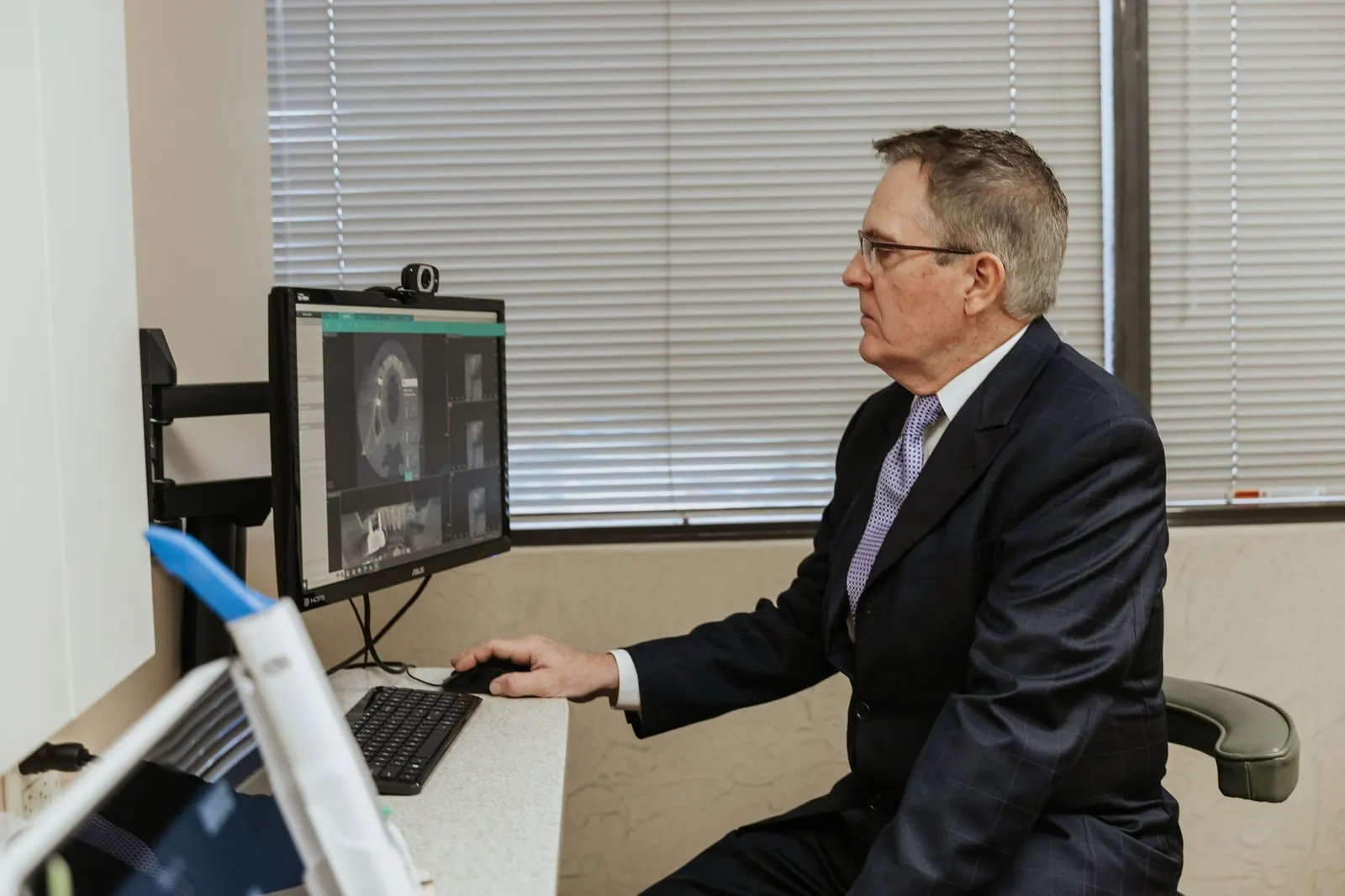
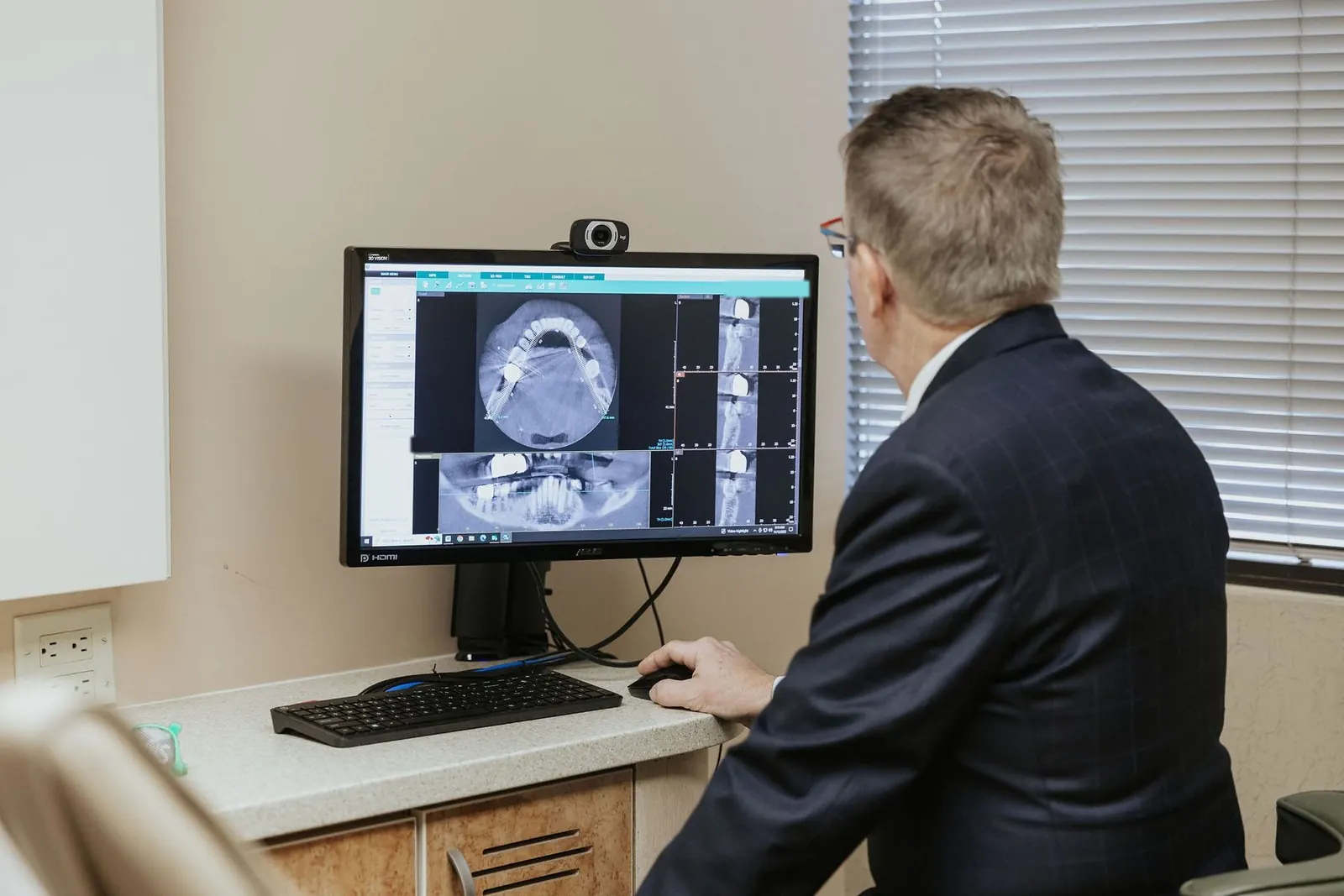
3D CBCT scan in-office
No longer than a panoramic X-ray.
Low-dose Green CT
An extremely small radiation dose compared with a hospital CT scan.
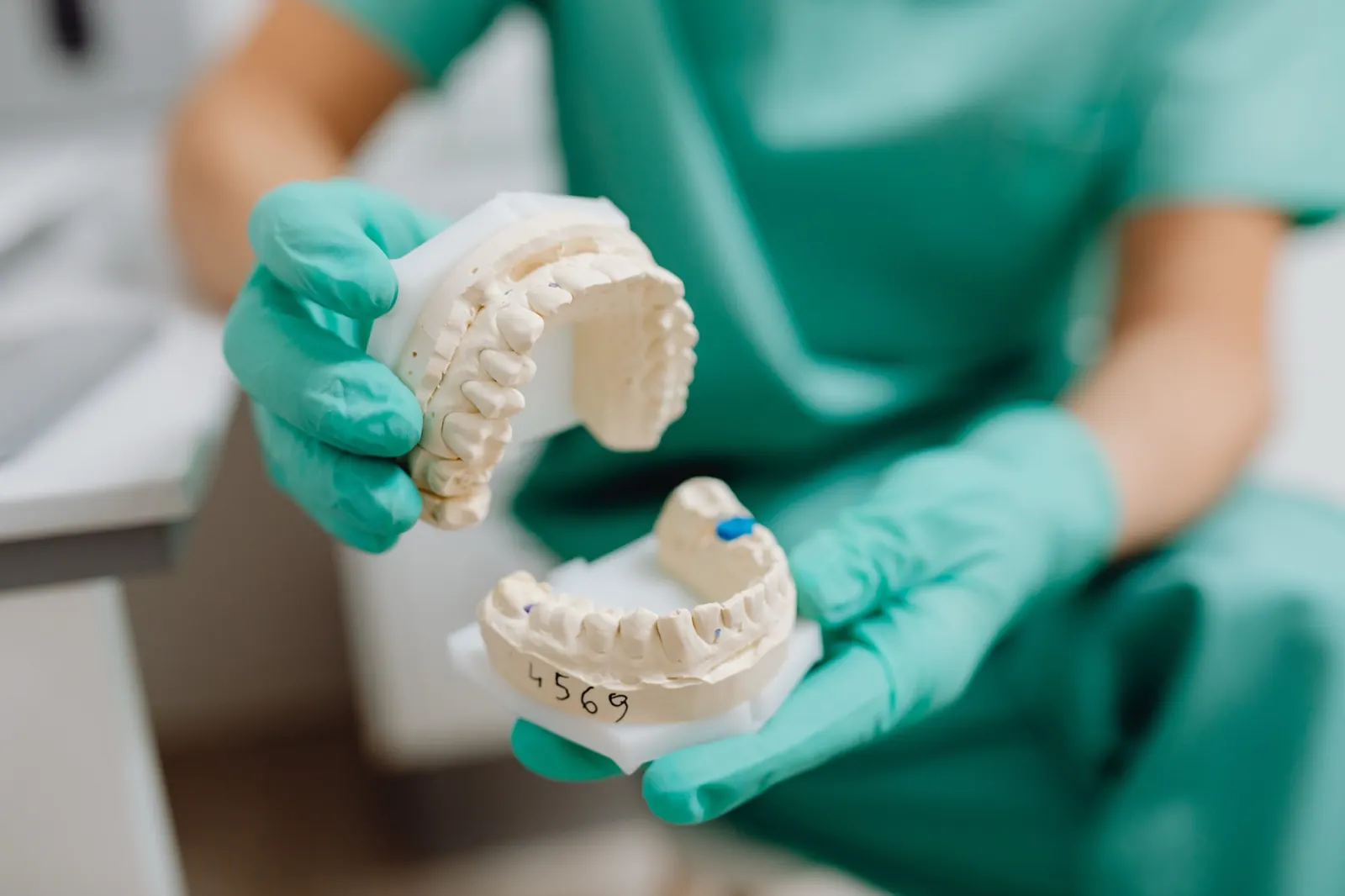
3D-printed surgical guide
Carries the virtual plan so the implant goes exactly where planned.


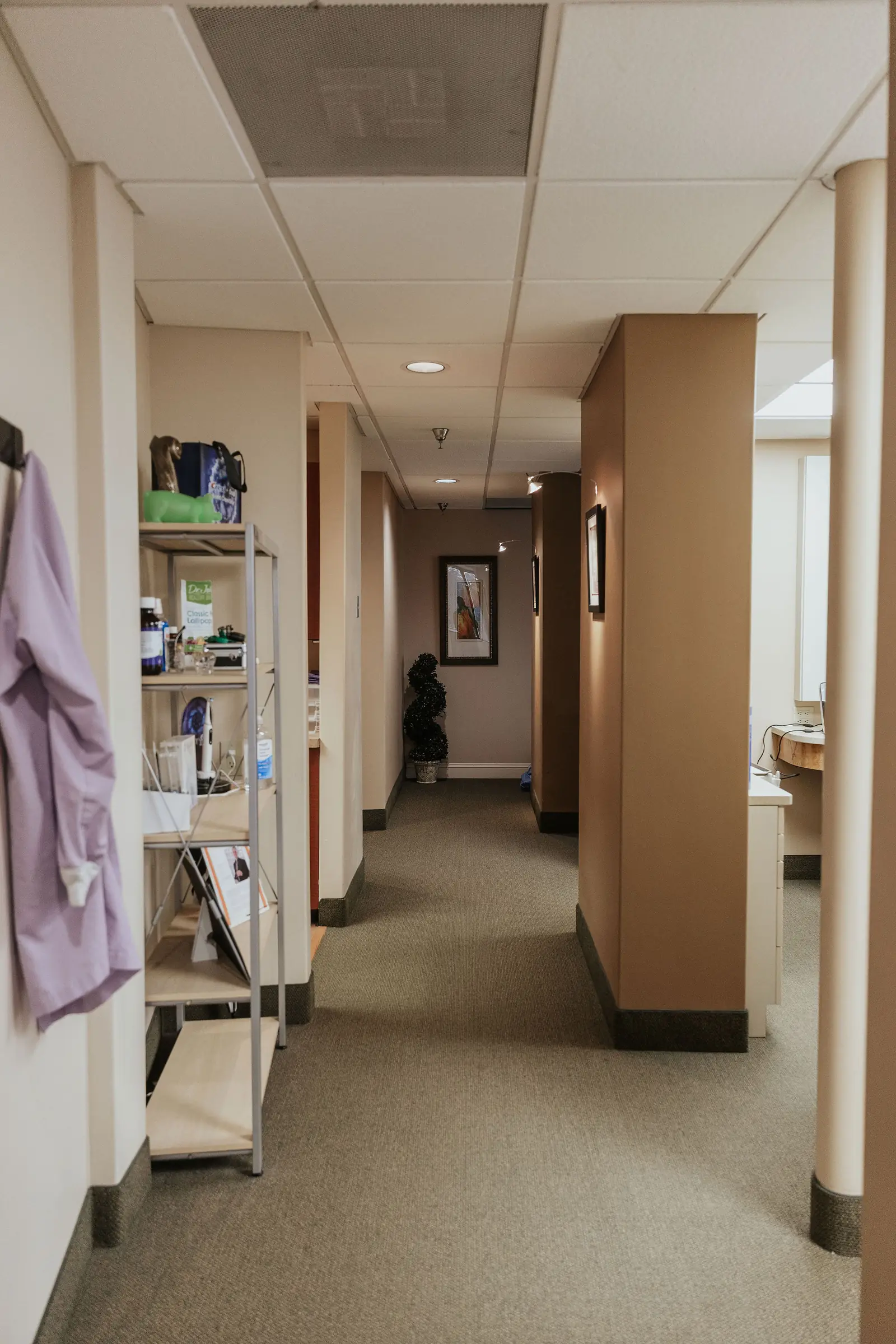
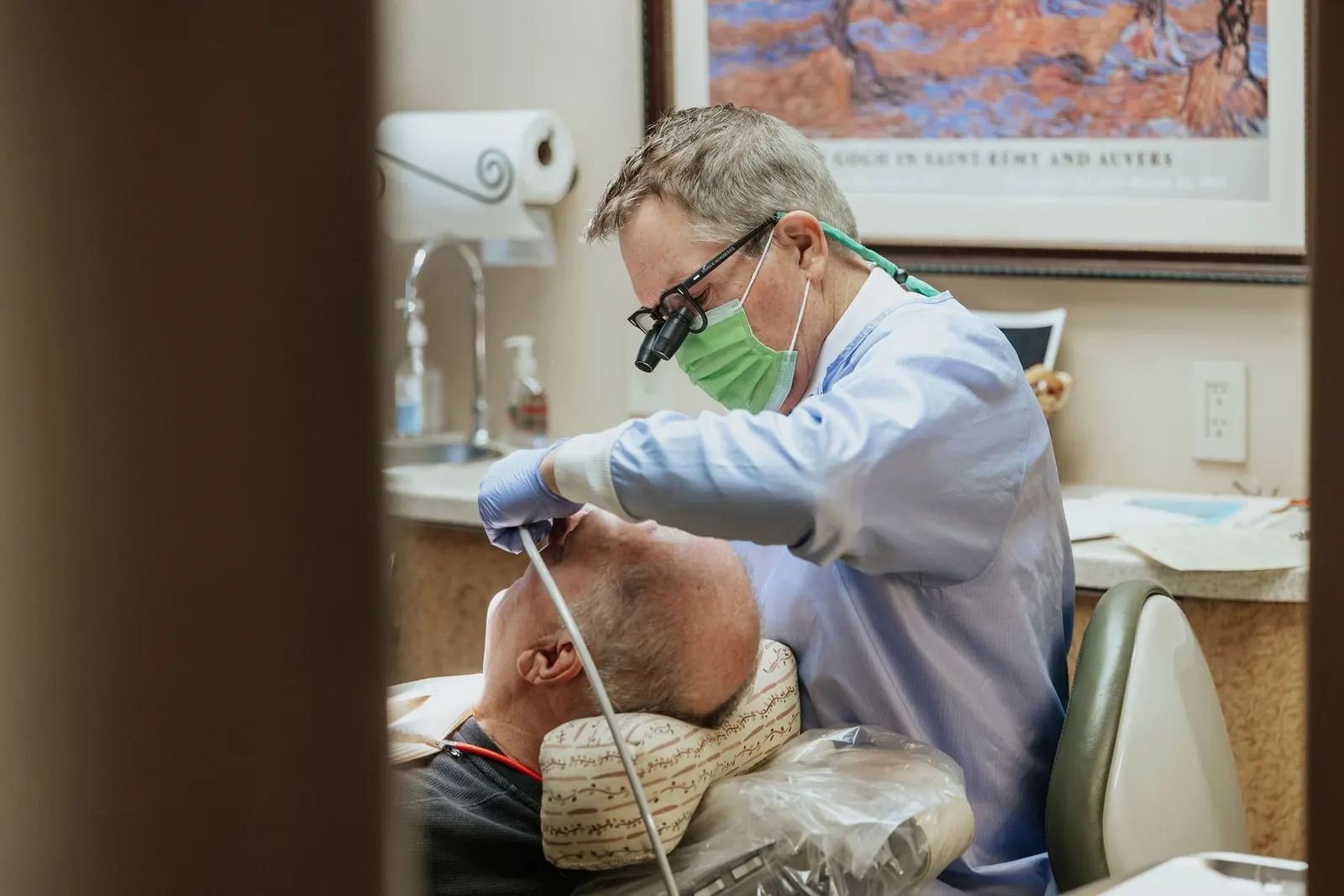
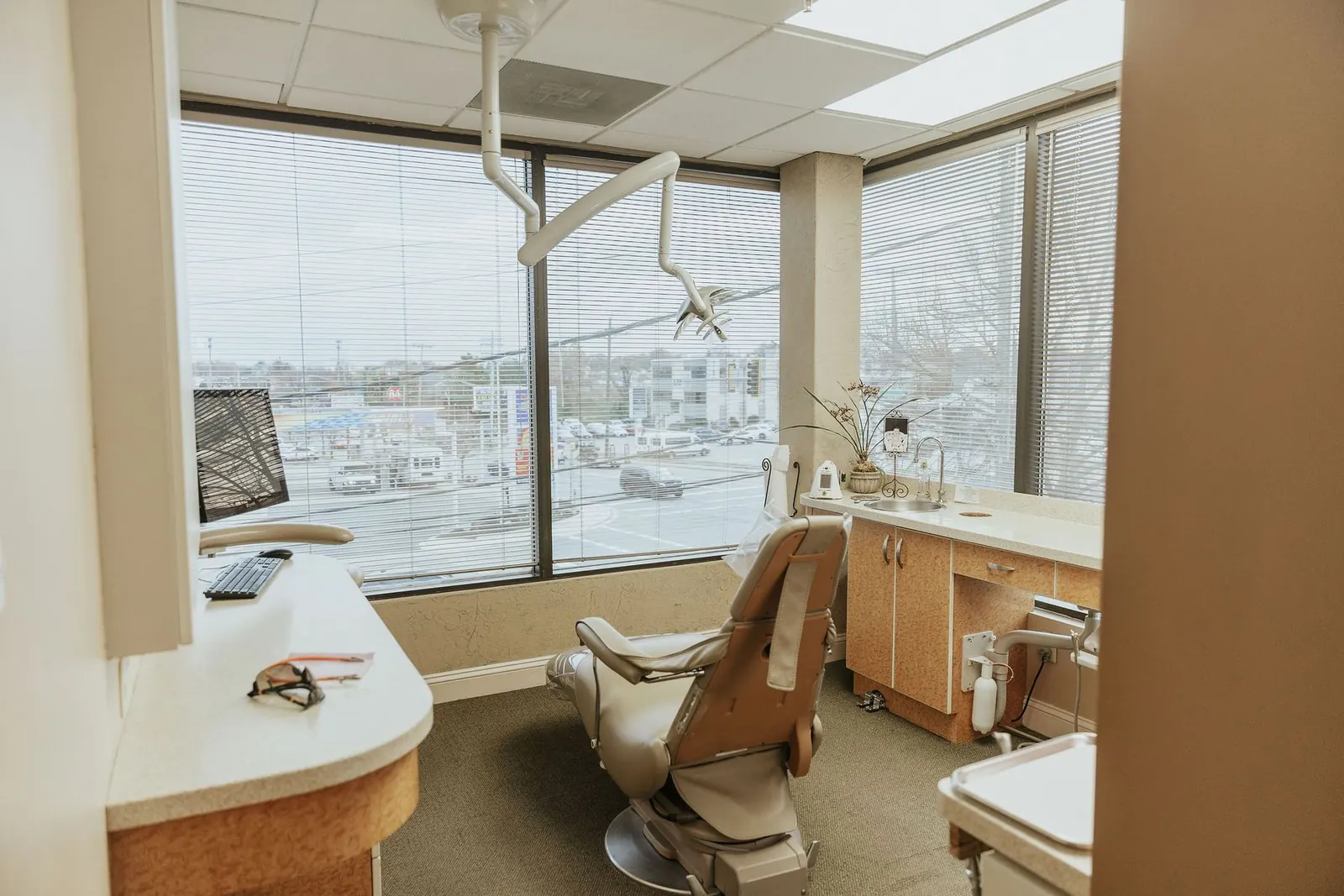
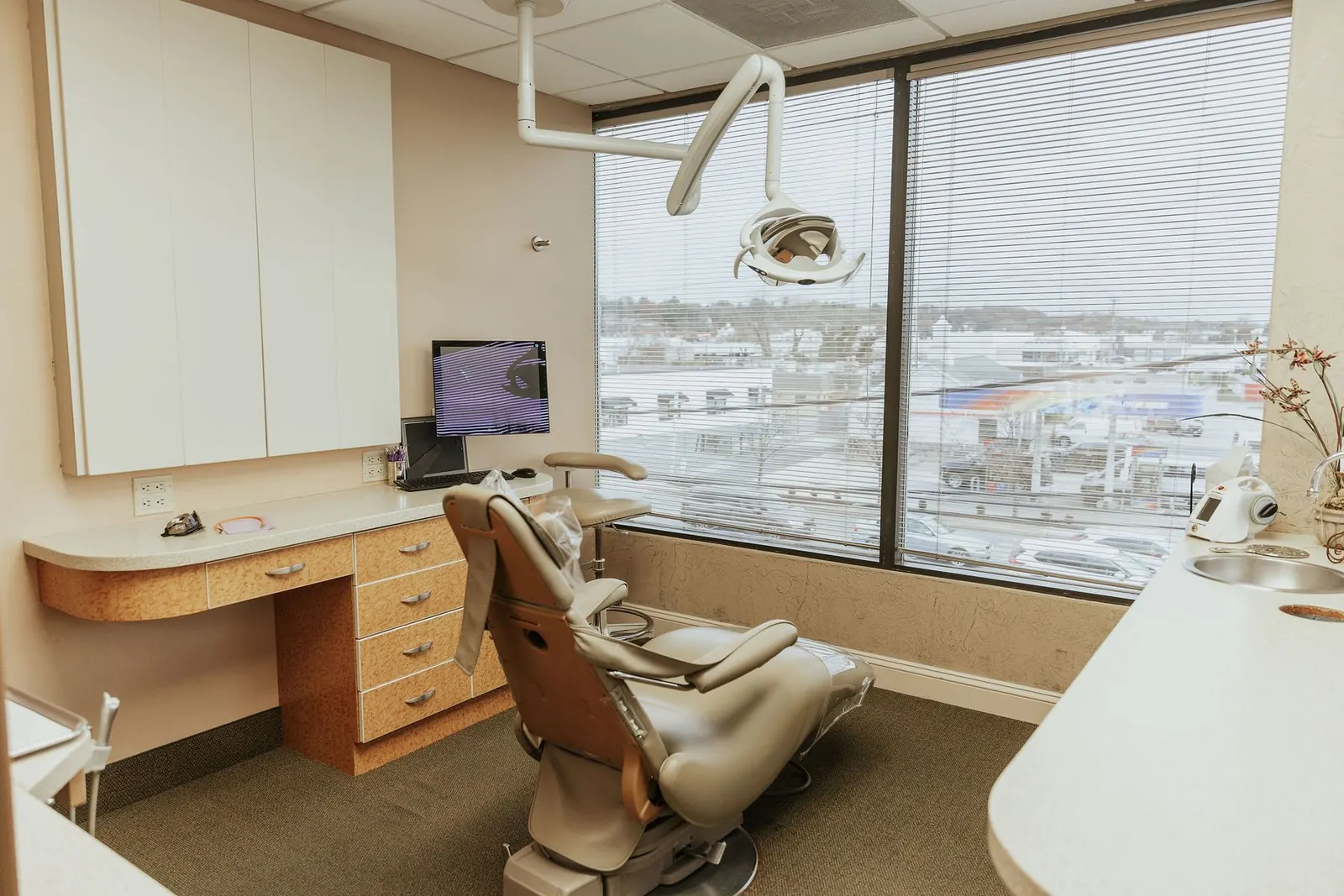
Every dental service in Timonium, all in one place.
Computer-guided implant surgery is one part of a full-service practice, and every one of these dental services is available in the same Timonium office.
Guided implant surgery, step by step
Here’s how computer-guided implant surgery works at the practice.
Take a 3D CBCT scan
The in-office Green CT scan takes no longer than a panoramic X-ray. Within minutes, software reconstructs your facial bone structure and reveals the quantity and quality of bone, including whether you’ll need grafting.
Place the implant virtually
The team virtually places your implant in the 3D model to simulate what’s possible in surgery. Once you accept treatment, the plan goes to a surgical guide manufacturer and is 3D-printed, then approved by Dr. Haywood.
Guided implant placement
The guide’s holes accept BioHorizons guided surgery drills and special metal sleeves, so the implant is placed exactly where it was positioned in the virtual surgery on the computer.
Patients in Timonium and Towson. In their words.
4.7 stars from 147 Google reviews · Dr. Steven W. Haywood, DDS: 35+ years in practice, Fellow of the ICOI, member of the AACD
“When I realized Dr. Haywood could give me implants that would be just like my natural teeth, I signed up immediately. After only a few painless visits, I had a smile like never before.”—Robert
“I’ve been putting off some serious dental procedures because of anxiety… Dr Haywood has been awesome with me. I have had major bone loss and need multiple implants, and he has made the whole experience very easy.”—Amanda
“My anxiety was put to rest in one visit… Now I actually get compliments on my teeth and I enjoy smiling more than ever.”—T.S.
“Received excellent care. Always detailed the work to be done and the cost. Friendly staff. Highly recommend.”—Dan
“I traveled to Dr. Haywood because I didn’t feel a regular dentist could handle my case… I’ve been thrilled with my new smile.”—John Palmer
of flexible payment plans with Cherry
- No-interest financing options with CareCredit for up to 12 months
- Cherry uses a soft credit check that won’t affect your credit score
- Out of network: we file your insurance paperwork for you
- Apply online before your visit and get a decision in minutes
Related treatments
More in dental implants
 Single Tooth ImplantReplace one missing tooth with a single dental implant in Timonium, MD. Root and crown replaced, neighboring teeth left untouched.
 Snap-On Implant TeethSnap-on implant teeth in Timonium, MD: removable full and partial dentures anchored by implants, with an open-palate upper design.
 Full-Arch Implant TeethFixed full-arch implant teeth in Timonium, MD: All-on-Four teeth that don’t wobble, planned from CT scan to final teeth in one office.
 Front Tooth ImplantsFront tooth implants in Timonium, MD: smaller implants, custom ceramic abutments and computer-guided placement for your smile zone.
 Implant BridgeImplant bridges in Timonium, MD: 2 or more implants support 3 or more teeth, often for 20–30% less than an implant per tooth.
 Dental Mini-ImplantsDental mini-implants and implant care in Timonium, MD: implants sized to fit, 3–4 month cleanings and protection from grinding.
Guided implant surgery questions,
answered
A cone beam CT (CBCT) is an X-ray machine that takes a three-dimensional image, rather than the two-dimensional picture of a conventional dental or panoramic X-ray. Software digitally reconstructs your bone structure, giving precise information about where bone is and where it may need repair.
The practice uses a Green CT scanner developed by VATECH, which emits a much lower dose of radiation than less eco-friendly scanners. The dose is extremely small, and there’s no comparison with the high radiation dose of a CT scan in a hospital. See our dental technology.
Implants generally don’t fail when they are placed in an ideal position, and without CBCT planning the exact placement can’t be assured. Poorly placed implants can fail or look unattractive, surrounding bone can be lost, and in the upper front jaw a poor placement can affect the smile for a lifetime.
When there is minimal room for error and very little available bone, when a specific placement angle is needed for the best outcome, when several implants need to be almost parallel to one another, and whenever maximum accuracy is required.
No. There are specific times when a guide isn’t indicated and an experienced surgeon can place an implant better freehand. Whether a guide is right for your implant is part of your treatment plan.
About 2–3 weeks. Once your treatment plan is accepted, the digital placement plan is sent to the surgical guide manufacturer, made on a 3D printer and sent back for Dr. Haywood’s approval.
Yes. The scan reveals deficiencies in the quantity and quality of bone, so if you need bone augmentation grafting as part of your care, you’ll know at that same visit. CBCT diagnostics take the guesswork out of implant surgery.
Yes. Poorly placed implants from other offices that have failed or look unattractive are seen regularly, and bad implants are fixed at the practice. Digital CBCT planning and guided placement are the cornerstones of that work. Request a consultation.
Virtually always. Front bone is often thinner and less dense, and a poorly placed implant in the smile zone shows, so smaller implants, custom ceramic abutments and computer-guided surgery are the standard approach for front teeth. See front tooth implants.
108 W Timonium Rd, Ste 200, Timonium, MD 21093, serving Timonium, Towson, Pikesville, Baltimore and the surrounding communities. New patients are welcome. The practice is out of network with insurance companies: you pay at the time of service and the office files the paperwork on your behalf for maximum reimbursement. HSA and flex plans are welcome, and financing is available through CareCredit and Cherry. See financing options.