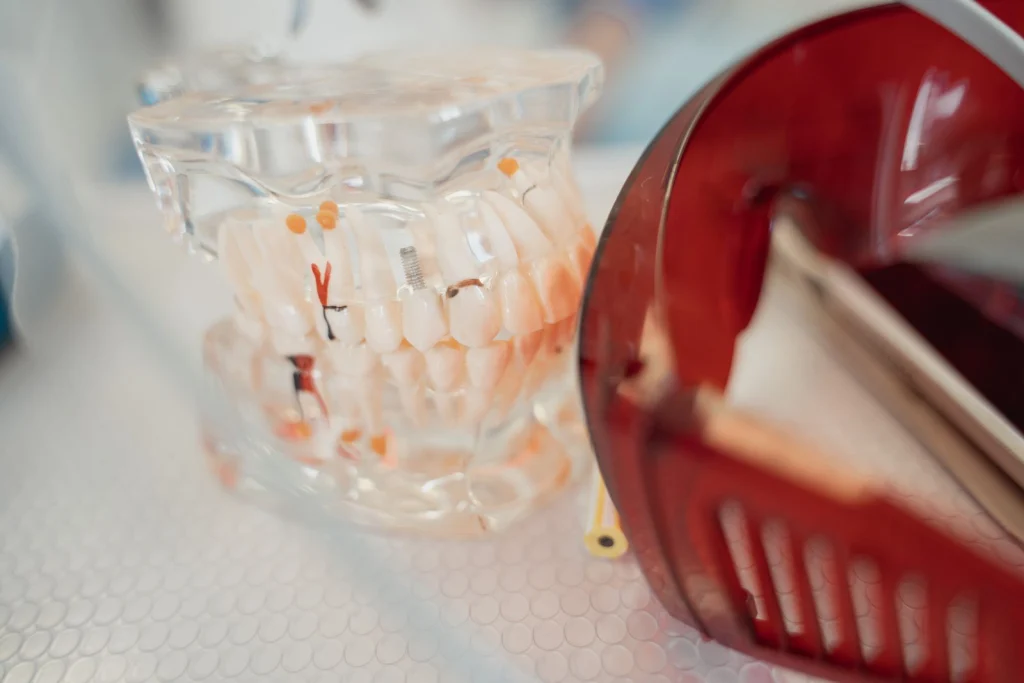
If you wear a loose denture, switching to implant-supported teeth usually follows five steps: an evaluation of the denture you have, a decision about keeping it or starting with a new one, a choice between removable snap-on teeth and fixed teeth, a 3D scan and implant placement, and a healing period before your teeth are attached to the implants. Many people start with fewer implants and add more later, so the switch doesn’t have to happen all at once.
This guide explains each step of the switch as Dr. Steven W. Haywood, DDS plans it at the Timonium office, so denture wearers in Timonium, Towson and Baltimore know what they are signing up for before the first appointment.
Signs your denture is ready for an upgrade
- It slips or clicks when you eat, talk or laugh.
- You rely on adhesive to get through the day.
- It causes sore spots on your gums, especially with harder foods or long wear.
- It keeps loosening, even after relines.
- You have stopped ordering certain foods, or avoid eating in front of other people.
- Your lower denture floats, because the tongue and cheeks move it.
A denture that loosens over time is not your fault. Nothing replaces the tooth roots under a denture, so the jawbone tends to shrink, and a denture that fit well at first can gradually loosen. Implants help prevent the bone deterioration that follows tooth loss. For a lower denture, the implant-supported denture is the standard of care recognized by the American Dental Association (ADA).
Step 1: bring in your problem denture
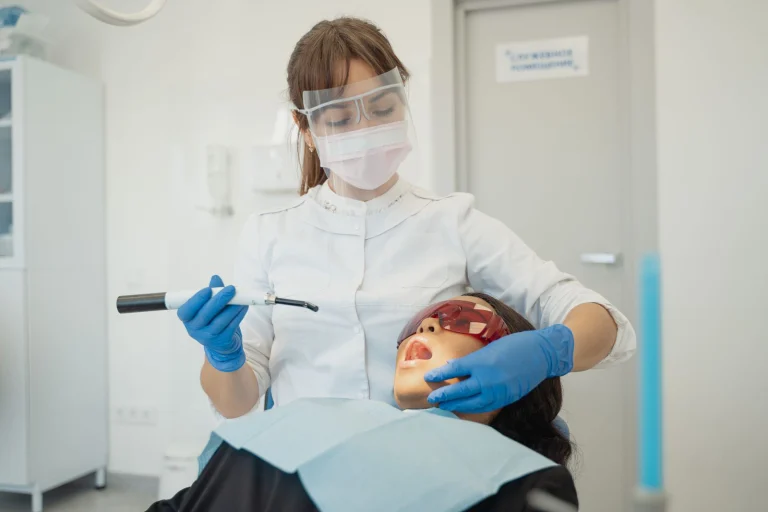
The practice’s invitation is simple: bring us your problem dentures. Solving denture problems takes experience in what has become a dying art. Dr. Haywood is specially trained in prosthodontics and evaluates how your current denture fits, how your bite comes together, what your gums and jawbone look like, and what you want from a new set of teeth.
This first visit is also where you find out whether implants suit you at all. Sometimes the answer is a better-made denture; sometimes it is implants; often it is both. Read about dentures in Timonium.
Step 2: decide whether to keep the denture you have
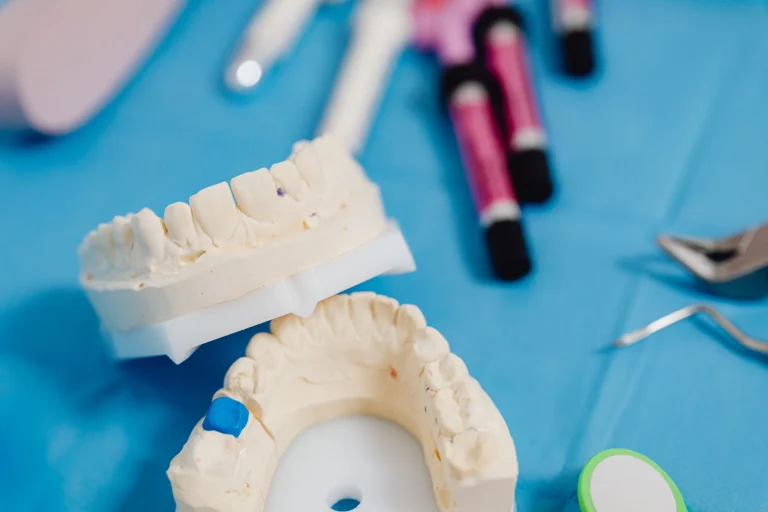
Implants can be placed under the dentures you already have. Because many dentures are poorly constructed, though, new dentures made with proper construction are often recommended for the best long-term value. Dentures at the practice are made with the branching technique, learned from Dr. Jack Turbyfill and not taught in dental schools, using the best teeth, the best plastics and lab technicians personally trained by Dr. Turbyfill.
A useful way to decide: if your denture looks right, fits your bite and simply won’t stay put, keeping it may make sense. If it is worn, bulky or has never felt right, putting implants under it only anchors a denture you don’t like.
Step 3: choose how your new teeth attach
Snap-on implant teeth
Snap-on teeth are a removable set that clips onto implants with snap connectors. Upper snap-on dentures at the practice use Locator and Equator attachments, two premium brands chosen for long-term success. The upper set usually rests on four or five implants and is shaped like a horseshoe, leaving the palate open. The lower set needs a minimum of two implants, spread apart so the denture doesn’t rock, and four or more are often preferred. Snap-on teeth come out for cleaning. See snap-on implant teeth.
Fixed full-arch implant teeth
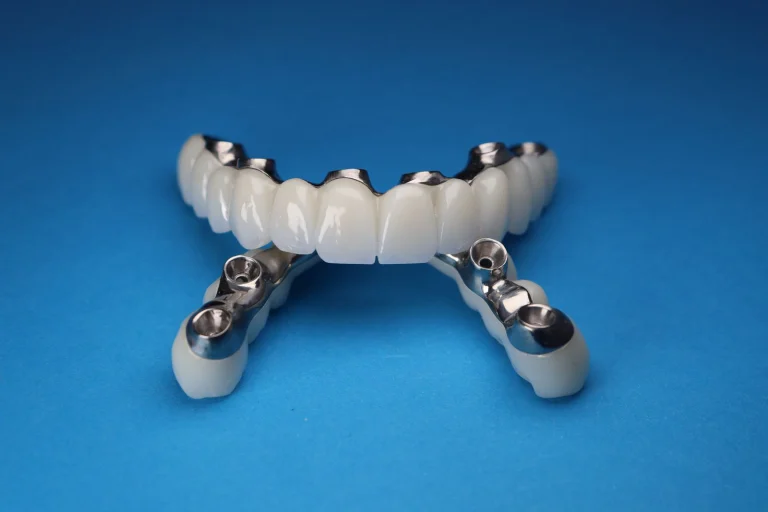
Fixed teeth are screwed or cemented onto at least four implants and are removed only by the practice. They don’t move while you eat, so they chew most like natural teeth, and they are the most costly option. See fixed full-arch implant teeth.
For a closer look at how the attachments work, read how implant dentures work. For a side-by-side comparison of the two styles, read full mouth dental implants: fixed or snap-on.
Step 4: scan, plan and place the implants
A low-dose Green CT cone beam scan shows the quantity and quality of your jawbone. Long-term denture wearers sometimes have thinner bone, and if grafting is needed you’ll know at that same visit. Implants under a denture often need to be almost parallel to one another, which is exactly when a 3D-printed surgical guide made from your digital plan matters most. Read about computer-guided implant surgery.
Active gum disease on any remaining teeth is treated first. If nerves are a concern, laughing gas lets you drive yourself home, oral conscious sedation needs a ride, and IV sedation is available for longer or more complex treatment. See sedation dentistry, and for the practical run-up to surgery day, getting ready for dental implant surgery.
Step 5: heal, then attach your new teeth
Implants that heal properly over the first 6–12 weeks after placement are considered to have lifetime potential. During healing, the implants must be left undisturbed: avoid chewing directly on them, and follow the instructions you are given about wearing your denture over the surgical area. With fixed full-arch plans, temporary teeth are in place while the implants integrate, so you can chew comfortably. With All-on-4, permanent dentures can be placed in as little as one appointment; whether that approach suits you depends on your scan.
Once the implants have integrated, your denture is fitted with its connectors, or your fixed teeth are attached, and your bite is checked.
Starting with two implants and adding more later
You don’t have to choose the most complete option on day one. Many people choose a lower snap-on denture on two implants for financial reasons, and in many cases more implants can be added over time, so you can upgrade the stability of your implant denture when finances allow. That makes a lower two-implant denture a common first step for people switching from a loose lower denture.
If you still have some of your own teeth
Implant work doesn’t mean losing all your teeth. Any useful teeth that can support a good final result are kept. Implants secure a partial denture better than the clips on a conventional partial, with no clips or wires showing in your smile, and without the stress that clips put on the teeth they grip. If you lose another tooth later, a tooth can simply be added to a snap-on implant partial instead of starting over.
Getting used to your new teeth
Most people find implant teeth easier to adjust to than a new conventional denture, because the teeth stay put. Your new routine includes professional cleanings every 3–4 months, since gum tissue doesn’t seal around an implant as firmly as it does around a natural tooth, and daily cleaning with interdental brushes, a water irrigator and an end-tuft or electric toothbrush. If you grind or clench, a custom night guard protects the implants. To see how the day-to-day compares, read living with implants vs. dentures.
What the switch costs
The cost depends on the number of implants, the type of teeth, whether a new denture is made and whether grafting is needed. A full upper snap-on set costs roughly 30% less than a comparable fixed set, and fixed teeth are the most costly option. Your own fee is set after your exam and scan.
The practice is out of network with all dental insurance companies. You pay at the time of your visit, and the office files the claim on your behalf so your plan can reimburse you for what it covers. Health savings and flex plans are welcome. CareCredit offers no-interest options for up to 12 months, and Cherry offers payment plans from 3 to 24 months. Compare financing options.
Frequently asked questions
Can implants be added to my current denture?
Yes, implants can be placed under existing dentures. A new, properly constructed denture is often recommended for the best long-term value, and Dr. Haywood can tell you which makes sense after looking at your current set.
How many implants do I need to stop my lower denture slipping?
A lower snap-on denture uses a minimum of two implants, and four or more are often preferred to stop the teeth rocking and to keep food from collecting underneath.
Will I be without teeth during treatment?
With fixed full-arch plans, temporary teeth let you chew comfortably while the implants heal. With snap-on plans, you are given instructions for wearing your denture during healing.
Is it too late if I have worn dentures for many years?
Not necessarily. The 3D scan shows how much bone is left, and thin bone can often be built up with grafting.
Start your switch in Timonium
Dr. Steven W. Haywood, DDS has over 35 years of experience and is a Fellow of the International Congress of Oral Implantologists, and every phase, from the scan to your finished teeth, happens in one office. Bring your denture to a consultation: see all dental implant options in Timonium, request an appointment or call (410) 453-9399. The office is at 108 W Timonium Rd, Ste 200, Timonium, MD 21093.
Ready to see your future smile?
Bring your loose denture to a consultation in Timonium and see your implant options.