If you live near Towson and your teeth look more yellow or stained than you would like, professional teeth whitening is often the quickest fix, but only if the stain is the kind whitening can reach. Surface stains from coffee, tea, red wine or tobacco usually respond well. Discoloration that comes from inside the tooth, from old fillings or from a single tooth that has darkened, often needs a different plan. Knowing which kind you have saves you money on products that were never going to work.
This article explains what causes stained teeth, how to match the stain to the right option, and how whitening works at the office of Dr. Steven W. Haywood, DDS, in Timonium, just north of Towson on York Rd.
What causes stained teeth
Tooth discoloration usually falls into one of three groups. They look similar in the mirror, but they respond very differently to treatment.
Stains on the surface of the tooth
These sit in the outer layer of enamel. The usual causes are everyday ones:
- Coffee, tea, red wine and dark sodas.
- Tobacco, whether smoked or chewed.
- Deeply colored foods and sauces.
- Plaque and tartar that build up when oral hygiene slips or cleanings are missed.
Surface stains are the ones teeth whitening treatments handle best.
Discoloration from inside the tooth
Some color comes from within. As enamel wears with age, more of the naturally yellower layer underneath shows through. A tooth that was hit hard can darken on its own. Certain medications taken while teeth were still forming, or too much fluoride in childhood, can leave gray, brown or white marks inside the tooth. These deeper stains are harder to lighten and sometimes can’t be lightened enough.
Things that look like stains but aren’t
Fillings, bonding and crowns don’t change color when you whiten, so an older tooth-colored filling can look darker once the teeth around it get brighter. Decay can also show up as a brown or gray spot. Neither is a whitening problem, which is one reason an exam comes before any whitening treatment.
Match the stain to the option
Here is a practical way to think about which option fits:
- Light surface staining. A professional cleaning and better home care may be the first step. Whitening can then brighten what is left.
- Overall yellowing or stubborn surface stains. Professional teeth whitening is usually the right tool.
- One tooth that has turned darker than the rest. Have it examined first. A single dark tooth can be a sign of a problem inside the tooth that needs attention before anything cosmetic.
- Very dark or deep discoloration. Whitening may help only partly. Dental bonding or porcelain veneers can cover color that bleaching can’t reach.
- Stains plus chips, gaps or worn edges. Whitening changes color, not shape. Bonding or veneers can address both at once.
For a deeper look at surface versus deep discoloration, read whitening vs bleaching for tooth discoloration.
Store kits, at-home trays and in-office whitening
Most people start in the drugstore aisle, and it is easy to see why. Strips, pens and whitening toothpastes are inexpensive and convenient. The trouble is that commercial whiteners that seem so promising often fail to deliver lasting results, and one-size products are made for an average mouth rather than yours.
At-home whitening in general also takes patience: it usually means committing two or three weeks. If you have an event coming up, or you have already worked through a few boxes of strips without much change, that timeline can be frustrating.
In-office whitening takes a different approach. Dr. Haywood offers in-office laser power whitening, with a plan customized to your teeth, designed to give you your brightest smile in the least amount of time.
How professional teeth whitening works at the Timonium office
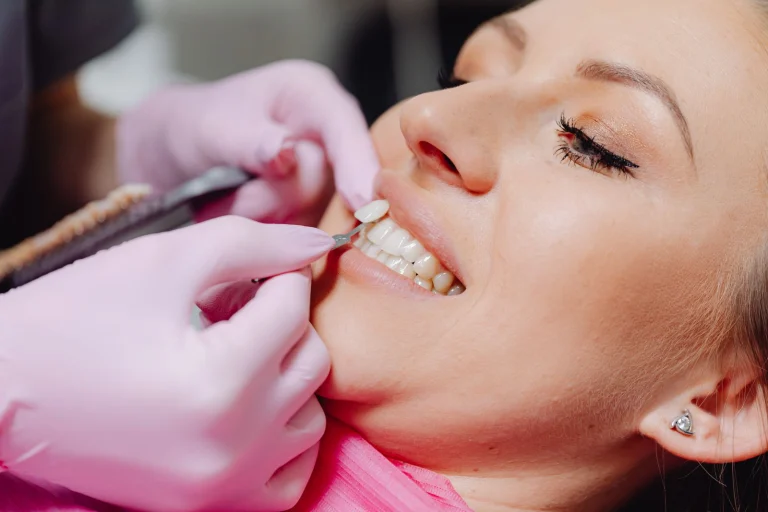
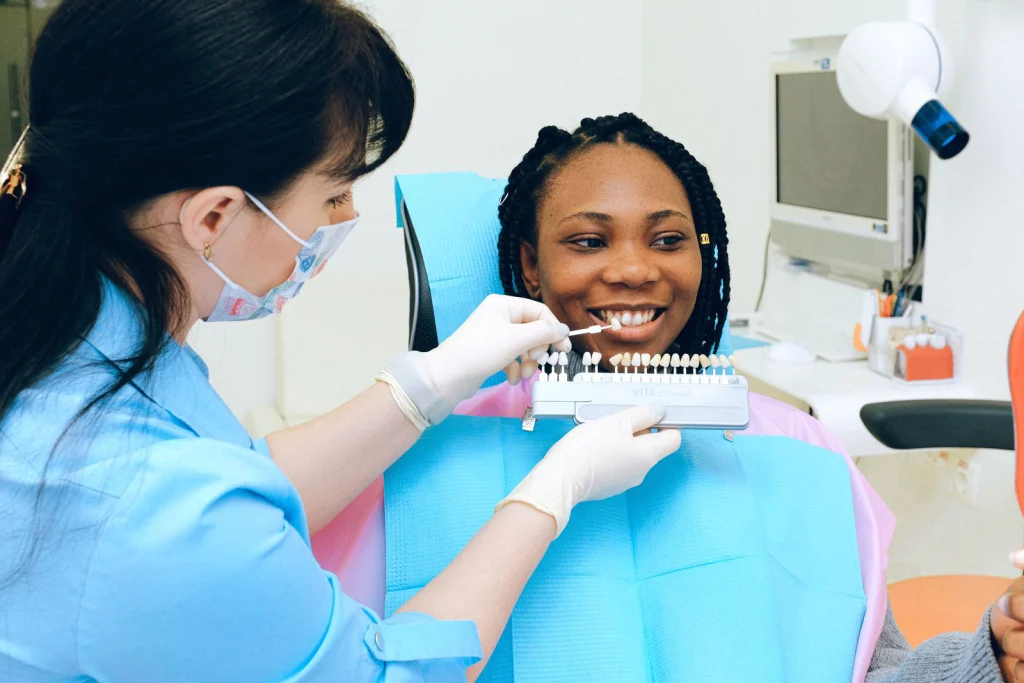
- A consultation first. Dr. Haywood looks at the shade of your teeth, the kind of staining you have and what you want from whitening. If your teeth are very dark, you will hear about all of your options before anything begins.
- An in-office whitening treatment. Treatment starts with a thirty-minute professional whitening treatment, as part of a plan customized to your needs.
- Laser activation. A laser is then applied for 1 to 2 hours. It activates the hydrogen peroxide in the whitening agent and significantly increases how quickly and effectively it works, helping dissolve stains, including the ones that like to hide.
The whole treatment takes place in the office under Dr. Haywood’s care. Learn more about laser whitening or see the main teeth whitening page.
When whitening isn’t the answer
Some stained teeth need more than a brighter shade. Two cosmetic dentistry treatments at the practice can correct discolored teeth that whitening can’t fully fix:
- Dental bonding. Tooth-colored composite resin sculpted onto the tooth can repair discoloration, chips and gaps, usually in a single visit. It is one of the most affordable cosmetic procedures, though resin can pick up stains over time.
- Porcelain veneers. Thin porcelain shells bonded to the front of the teeth can hide stains and resist new ones better than natural teeth. Over very dark teeth, a veneer may need to be more opaque. For healthy teeth, prepless veneers can brighten teeth with little or no drilling.
If you are weighing several changes, a smile evaluation with cosmetic imaging shows possible results on screen before you commit to anything.
Keeping your teeth bright after whitening
Whitening results depend a great deal on everyday habits. The practice advises minimizing staining foods and whitening routinely as part of caring for any cosmetic result. A few habits help:
- Rinse with water after coffee, tea, cola or red wine.
- Keep up with brushing and flossing, since plaque holds on to stains.
- Keep your regular cleanings and checkups, and ask how your shade is holding up.
- If you use tobacco, know that it will keep restaining your teeth.
Good oral health and a bright smile go together: healthy gums and clean teeth make whitening results look better and last longer.
Visiting from Towson
The office is in Timonium Green at 108 W Timonium Rd, Ste 200, Timonium, MD 21093. From York Rd, turn onto Timonium Rd, then right onto Greenspring Dr, and take the very first left into the parking lot. New patients are always welcome, and Dr. Haywood has cared for smiles in Timonium, Towson and greater Baltimore for over 35 years. Dr. Haywood is also a member of the American Academy of Cosmetic Dentistry.
Office hours are Monday 8:30 AM to 6:30 PM, Tuesday 8:30 AM to 5:00 PM, Wednesday 8:30 AM to 3:30 PM, Thursday 8:30 AM to 4:30 PM and Friday 8:30 AM to 4:00 PM. The office is closed on weekends. See more about visiting as a patient near Towson.
What teeth whitening costs, and how to pay
Your fee depends on your teeth and your plan, so it is discussed at your consultation. The practice is out of network with all dental insurance providers: you pay at the time of your visit, and the office files the claim so your plan can reimburse you for whatever it covers. Many dental plans treat whitening as cosmetic, so it is worth checking your benefits. HSA and flex plans are welcome for eligible care, and financing is available through CareCredit, with no-interest options up to 12 months, and Cherry, with plans from 3 to 24 months. See financing options.
Frequently asked questions
Can yellow teeth actually be whitened?
Often, yes. Yellowing from surface stains and everyday habits usually responds well to professional whitening. Yellowing from worn enamel or discoloration inside the tooth can be harder to change, and Dr. Haywood will tell you at your consultation what is realistic for your teeth.
Will whitening change the color of my fillings or crowns?
No. Fillings, bonding, crowns and veneers keep their color. If you have tooth-colored work on your front teeth, talk about it before whitening so the result looks even.
Is professional whitening better than whitening strips?
Strips can lift some surface staining, but commercial whiteners often fail to deliver lasting results. In-office laser power whitening is customized to your teeth and uses a laser to boost the whitening agent, so you get a brighter smile in less time. For more, read why professional whitening beats store kits.
Is whitening safe for my teeth?
An exam first is the safest start, so problems such as decay or gum disease are treated before whitening. Read more about tooth whitening safety.
Where exactly is the office?
Just north of Towson, in Timonium Green at 108 W Timonium Rd, Ste 200, Timonium, MD 21093.
Book teeth whitening near Towson
If stained teeth are holding back your smile, find out which option will actually work for you. Request an appointment or call (410) 453-9399 and mention teeth whitening. The office is at 108 W Timonium Rd, Ste 200, Timonium, MD 21093, a short drive up York Rd from Towson. For the full picture of in-office treatment, read the Timonium teeth whitening guide.
Ready to see your future smile?
Book a whitening consultation in Timonium, just north of Towson, to find the right fix for your stains.